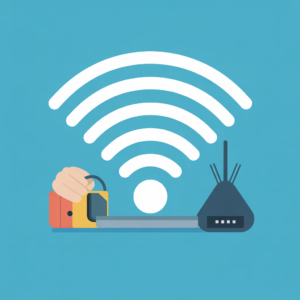
Imagine sipping your coffee in a cozy café, laptop open, ready to tick off your to-do list using the free Wi-Fi. Feels convenient — even smart. But what if that “free network” is really a digital open house, where a stranger could peek over your shoulder, swipe your bank login, or drop malware on your device — all while you enjoy your brew? In 2025, public Wi-Fi is more dangerous than ever before.
Why Public Wi-fi Is Riskier Than Ever
Public Wi-Wi — I mean public Wi-Fi — used to be a harmless convenience. But as cyber-threats evolve, those coffee-shop networks and airport hotspots have become minefields. First, many networks still run without encryption or proper security. That means your data travels like a postcard: visible to anyone paying attention. Cyber criminals use packet-sniffing tools to intercept what you send and receive, whether it’s a casual message or your online banking credentials. (protectdevice.com.ng)
Meanwhile, the techniques attackers use have matured. Fake hotspots — sometimes called “evil twin” networks — are more common and more convincing. An unsuspecting user might join what looks like the legitimate “Airport_Free_WiFi,” but in reality, it’s a trap. Once connected, the hacker sees everything: passwords, messages, even bank details. (Guardian Info)
Worse yet: even with some security measures in place, new technical vulnerabilities keep popping up. Researchers in 2024–2025 have documented attacks where adversaries hijack TCP connections over Wi-Fi — even if the network claims to be secured. That means your “secure” session could be silently hijacked, without you noticing a thing. (arXiv)
Put simply: convenience no longer equals safety.
Common Threats on Public Wi-Fi
Public Wi-Fi might seem harmless — but it comes with a laundry list of hazards. Let’s break them down:
- Man-in-the-Middle (MitM) Attacks: Hackers intercept the communications between your device and the internet, stealing sensitive info like passwords or bank logins. (SecureW2)
- Evil Twin / Rogue Hotspots: Fake networks mimic legitimate one (e.g. “CoffeeShop_WiFi_Free”) so you connect — then your data flows straight to attackers. (Guardian Info)
- Packet Sniffing & Eavesdropping: Unencrypted data — login credentials, messages, even browsing behavior — can be caught by anyone with the right tools. (protectdevice.com.ng)
- Session Hijacking / Side-channel Attacks: Even encrypted networks are not always safe; some attackers leverage side-channel weaknesses (like TCP frame size leaks) to hijack sessions, even from afar. (arXiv)
- Malware & Ransomware Injection: By tricking users into downloading malicious files or by hijacking unsecured network entry points, attackers can install malware that spies on or takes control of devices. (Windows101tricks)
- Identity Theft & Financial Fraud: Once credentials or session tokens are stolen, hackers might infiltrate bank accounts, email, or other sensitive services — and you may not even realize until it’s too late. (SecureW2)
What’s Changed in 2025 (And Why It Matters)
Public Wi-Fi has never been bulletproof — but a few new developments make it particularly hazardous in 2025.
Advances in Attack Techniques
Security researchers recently revealed side-channel attacks that can hijack TCP connections even over “secured” Wi-Fi networks, bypassing standard encryption and wreaking havoc quietly. (arXiv) This means even if a hotspot claims to use WPA2/WPA3 or other encryption protocols — which were once considered safe — your data could still be at risk.
Wider Availability of Tools for Hackers
Creating fake hotspots, sniffing data packets, or executing MitM attacks used to require significant know-how. Now, affordable, off-the-shelf tools (and sometimes even free software) make these attacks within reach of almost anyone. That dramatically increases the number of potential attackers.
More Sensitive Data Online
In 2025 we carry so much of our lives on our devices — banking apps, work email, personal chats, online shopping, sometimes even identity documents. That makes what you do on Wi-Fi a treasure trove for cybercriminals. A single careless connection could expose dozens of pieces of sensitive data.
False Sense of Security
Many Wi-Fi providers advertise “Secure Wi-Fi” or “Encrypted Hotspot,” lulling users into a false sense of safety. People connect, relax, browse — unaware that even technically “secured” networks may still be vulnerable due to flaws in router configurations, device vulnerabilities, or advanced attack vectors.
Who’s Most at Risk — And Why
Not everyone faces the same level of danger on public Wi-Fi. Certain people and use-cases are especially vulnerable:
- Remote workers and freelancers: You log in to work email, corporate dashboards or cloud services on public Wi-Fi — that’s a goldmine for hackers.
- Online banking users and shoppers: Entering passwords or payment details over insecure networks is like handing over your wallet.
- Frequent travelers: Airports, hotels, cafes — a traveler’s circuit is full of tempting free Wi-Fi hotspots, many unsecure. In fact, agencies have recently issued warnings for travelers to avoid public Wi-Fi. (Statesman)
- Users in regions with weak network security norms: In many countries, including places where infrastructure is older or less regulated, public hotspots often lack basic security standards — making them especially susceptible to attacks. (protectdevice.com.ng)
How to Stay Safe: Practical Strategies
You don’t need to throw your laptop into a drawer every time you leave home. Instead, you can adopt some savvy habits to stay secure.
Essential Safety Measures
- Use a reputable VPN: A trustworthy VPN encrypts your internet traffic end-to-end, effectively hiding your data even if someone intercepts it. This is your first line of defense. (Guardian Info)
- Avoid sensitive transactions over public Wi-Fi: Banking, online shopping, password changes — best done on secure networks or over your mobile data, not public Wi-Fi.
- Disable auto-connect, sharing, and network discovery: Ensure your device doesn’t auto-join unknown networks; turn off file sharing or network discovery when on public Wi-Fi. (Guardian Info)
- Use HTTPS and enable security features: Only visit websites with “HTTPS” (look for the lock symbol), and where possible, use browser security features like HTTPS-Only mode.
- Keep your devices updated & patched: Outdated operating systems or apps can have security flaws that hackers exploit. Regular updates reduce this risk. (LinkedIn)
Advanced Precautions (Especially in 2025)
- Treat even “secured” public Wi-Fi with suspicion: Given recent hacking techniques, WPA2/WPA3 isn’t a guarantee. Combine VPN, HTTPS, and caution.
- Use a mobile hotspot or your phone’s data connection when possible: If you’re handling something important — banking, private email, sensitive work — bypass public Wi-Fi altogether.
- Use two-factor authentication (2FA): Even if credentials are stolen, 2FA adds an extra layer, making unauthorized access harder. (GlassWire)
- Monitor your accounts often: Regularly check bank and credit accounts for suspicious activity — early detection reduces potential damage.
Public Wi-Fi: Convenience with Serious Costs
Let’s put it plainly: Public Wi-Fi is a double-edged sword. On one side, it offers convenience, connectivity, flexibility — a free internet hookup wherever you go. On the other, especially in 2025, it’s like strolling through a crowded marketplace with your wallet wide open.
For many, it’s a trade-off worth avoiding. But with increasing cyber threats and more aggressive attackers, using public Wi-Fi has become less of a convenience and more of a calculated risk.
Here’s a quick comparison to illustrate what you gain — and what you could lose — when using public Wi-Fi:
| Benefit of Public Wi-Fi | Hidden Risks in 2025 |
|---|---|
| Free internet on the go | Data interception (passwords, banking info) |
| Easy access in cafés, airports, hotels | Exposure to “evil twin” rogue networks |
| Allows remote work/travel browsing | Malware/ransomware injection and session hijacking |
| Bypasses mobile data limits | Identity theft, account takeover, financial fraud |
Final Thoughts: Treat Public Wi-Fi Like a Busy Street
Public Wi-Fi is like a busy crowded street filled with strangers: some innocuous, some with ill intent, many unknown. Walking through is fine — but you wouldn’t shout your PIN or wallet details out loud, would you?
In 2025, with hackers more resourceful than ever, what seems like a harmless convenience can turn into a security nightmare. So next time you see “Free Wi-Fi” blinking on your phone… take a breath. Then think twice.
If you must connect: use a solid VPN, avoid sensitive transactions, and stay alert. Better yet — use your mobile hotspot or wait until you’re on a safe, trusted network.
Share this post if you know someone still using public Wi-Fi for banking or work. Better to be safe than sorry.
Call to Action (CTA):
If you found this useful — or shocking — pass it on. Share with friends and family: help them avoid becoming the next cyber-victim. Read more about VPN safety, cyber hygiene, and online privacy tips on our blog.