How to Secretly Make Your Old Android Phone Run Like a Brand New Device
Your phone is not broken. It is not dying. It is choking — and you are one settings menu away from bringing it back to life.
Most people either live with a sluggish Android phone or spend money on a new one. But there is a third option, and almost nobody uses it. Deep inside your Android’s settings are hidden controls, overlooked tweaks, and secret menus that phone manufacturers never advertise. Activate the right ones, and your phone feels like it just came out of the box.
This post will walk you through every one of those hidden tricks. By the end, you will know exactly how to make your old Android phone run faster, last longer on a single charge, and handle daily tasks smoothly — without spending a single naira, dollar, or cent.
Why Your Old Android Phone Slows Down (And Why It Is Not What You Think)
Here is the uncomfortable truth: your phone did not get slower. The world around it got heavier.
Every app you installed in 2021 has been updated dozens of times since. Each update added features, heavier animations, and fatter background processes. Apps that once ran lightly now demand twice the memory. Your phone’s hardware has not changed, but the software it has to run has ballooned in size and appetite.
Excessive background activity is one of the biggest culprits — too many apps running in the background slow your phone down, especially in older models lacking suitable hardware for heavy multitasking. Poorly configured settings, such as auto-sync, location access, or background data transfers, make things worse across the board.
Add to that a storage drive that is 80% full, a cache folder swollen with junk files, and animations set to play at full speed — and you have a phone that feels sluggish every single time you tap something.
The good news? Every one of those problems is fixable without touching your warranty or spending money on new hardware.
“The average person replaces their smartphone every 2.5 to 3 years, yet most phones are capable of performing well for five years or more with the right optimizations.” — Composite insight based on consumer behavior research, 2024 (editor to verify attribution before publishing)
There is also a bigger picture worth mentioning. Of the 16 billion phones owned worldwide, over 5 billion are expected to become e-waste this year, according to the International Waste Electrical and Electronic Equipment (WEEE) Forum. Most of those phones are not broken. They are just slow. And their owners do not know how to fix them.
You are about to be one of the few who do.
The Secret Menu Nobody Told You About: Unlocking Android Developer Options
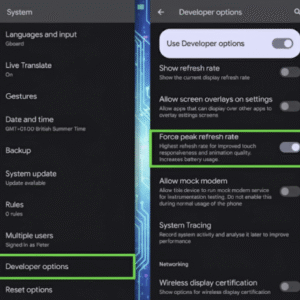
The single most shocking thing about Android performance optimization is that the most powerful settings are hidden behind a secret menu. It is called Developer Options, and it is buried so deep that most Android users have never seen it.
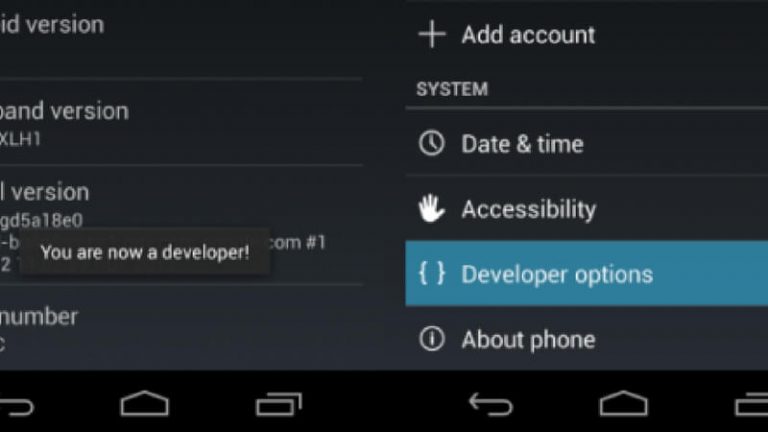
To unlock it, go to Settings > About Phone > Software Information > Build Number. Tap “Build Number” seven times in a row. Your phone will display a message saying “You are now a developer.” That is it.
Now go back to your main Settings page. A new menu called “Developer Options” has appeared.
Inside Developer Options, find three settings that will change how your phone feels immediately:
- Window animation scale — set this from 1x to 0.5x
- Transition animation scale — set this from 1x to 0.5x
- Animator duration scale — set this from 1x to 0.5x
Android has a bunch of UI animations that look aesthetically pleasing but could make your phone feel more sluggish than it actually is. Setting these to 0.5x makes your device feel significantly faster without changing how anything actually works.
Your apps will not open any faster in raw processing speed. But every tap, every swipe, every transition will feel twice as snappy. The psychological effect is immediate and significant. It is like the difference between a revolving door that takes two seconds to spin versus one that spins in half a second. You are doing the same thing — you just feel like you are flying.
Actionable takeaway: Unlock Developer Options today and reduce all three animation scales to 0.5x. You will feel the difference within five minutes.
The Hidden Storage Crisis Killing Your Android Speed (And How to Fix It in Minutes)
Here is something most people do not realize: when your Android phone’s storage fills up past 75% capacity, performance drops sharply. This is not a myth. The operating system needs free space to create temporary files, move data around, and run smoothly. When that space disappears, your phone starts struggling with every task.
Low storage on Android is one of the most common reasons a phone runs slowly, alongside cache buildup, too many background apps, malware, and outdated software.
The fix is a three-step process that takes about fifteen minutes:
- Clear app caches: Go to Settings > Apps. Open your most-used apps one by one and tap “Clear Cache.” You are not deleting your data — you are deleting the temporary junk files each app saves without asking you.
- Offload photos to the cloud: Your camera roll is probably the single biggest consumer of storage on your phone. Move everything to a cloud storage service and delete local copies. Freeing up a few gigabytes here makes an enormous difference.
- Uninstall apps you have not opened in 60 days: You know which ones they are. That fitness app you downloaded in January. The food delivery app from a city you visited once. Gone. Every uninstalled app reclaims RAM, storage, and background processing power.
One more thing: avoid the temptation to use a third-party “cleaner” or “booster” app from the Play Store. Most of them do almost nothing useful and run their own background processes that slow your phone down. Your stock Android settings do the same job better and for free.
Actionable takeaway: Check your storage today. If it is over 75% full, start clearing. Aim for at least 20% free space as your new baseline.
Lite Apps: The Surprisingly Powerful Swap That Cuts Lag in Half
This one surprises people every time. Some of the biggest performance villains on your phone are apps you use every single day — Facebook, Instagram, Messenger, TikTok. These apps are built for the latest flagship devices with 12GB of RAM. On your three-year-old phone with 3GB or 4GB, they run like trucks in mud.
The fix is switching to Lite versions.
Many apps like Facebook, Messenger, and Instagram have Lite versions that use less resources and take up less space. These Lite or Go editions are perfect for older devices that may struggle with the full versions. They run smoother, use less memory, and are often faster because they are optimized for devices with limited resources.
Here is what switching to Lite apps typically gains you:
- Facebook Lite is around 2MB versus the standard app’s 80MB+
- Messenger Lite uses a fraction of the background data
- YouTube can be replaced with the browser version to skip the memory-hungry app
- Twitter/X Lite exists and performs significantly better on older hardware
- Google Maps Go is optimized for devices with limited RAM
The trade-off is minor: you lose some visual bells and whistles. The gain is major: your phone feels genuinely responsive again. Most people do not even notice the missing features within a week of switching.
Actionable takeaway: Search for the Lite version of every major social app you use. Install it, uninstall the full version, and give your phone a week. The difference is dramatic.
The Background App Problem: What Is Really Happening Behind Your Screen
Right now, while you are reading this, there are probably a dozen apps running behind your screen. Checking for notifications. Syncing data. Refreshing feeds. Waiting for you to come back. Every single one of them is consuming RAM and battery life that your active apps desperately need.
Android has a built-in system for managing this, but it does not always work the way you want. Here is how to take manual control:
Go to Settings > Battery > Battery Optimization (this menu name varies slightly between manufacturers). From here, you can restrict which apps are allowed to run in the background. Any app that does not need to send you live notifications can be restricted.
Also check Settings > Accounts and disable auto-sync for any account you do not actively use. Google, Microsoft, and social media accounts sync constantly in the background by default. Turning off auto-sync for dormant accounts takes one minute and recovers meaningful performance.
Even if you dutifully swipe away apps on your Recents screen, they might still be holding onto RAM, which quickly adds up. And if you have only 2GB or 3GB to begin with, a weekly restart will do wonders for your phone’s performance and battery life.
Speaking of restarts, this is the most underrated performance tip in existence. Most people restart their phones only when forced to by an update. Restarting once a week clears RAM, kills stuck background processes, and gives your phone a clean slate. Think of it as the equivalent of opening all your windows to let stale air out of a room.
Actionable takeaway: Restrict background activity for apps that do not need live updates. Restart your phone every Sunday morning. These two habits cost nothing and deliver consistent results.
Display Settings That Secretly Drain Your Phone and Slow It Down
Your screen is your phone’s most power-hungry component. The settings controlling how your display behaves have a direct impact on both battery life and overall performance. Most people never touch them after the initial setup.
Here are the changes that actually move the needle:
Lower your screen resolution. Many mid-range and older Android phones let you drop the display resolution in Settings > Display. Your screen is so small that you genuinely cannot tell the difference between 1080p and 720p at arm’s length. But your GPU works significantly harder to render at higher resolutions. Dropping resolution frees up processing power for everything else.
Turn on dark mode (if you have OLED). If your Android phone has an OLED screen, using dark mode extends the battery life because it uses less power to light the display. Unlike LCD screens, OLED displays turn off the pixels to achieve blackness, so using fewer pixels is more efficient. More battery life means the phone runs cooler, and a cooler phone runs faster. It is a chain reaction.
Lower your screen refresh rate. Many phones default to a high refresh rate (90Hz or 120Hz) that looks smooth but burns through battery and processing resources. Dropping to 60Hz in Settings > Display > Refresh Rate has almost no visible impact on daily browsing and messaging but extends battery life noticeably.
Reduce screen brightness. Auto-brightness is convenient but can keep your screen brighter than necessary. Setting a manual cap at around 70% saves power without making reading uncomfortable.
Actionable takeaway: Go through your Display settings today. Lower the resolution, enable dark mode if your screen is OLED, and reduce refresh rate to 60Hz. These three changes together can add one to two hours of battery life per day.
Software Updates: The Counterintuitive Truth About New Android Versions
Here is where many people get confused. Conventional wisdom says to always update your phone’s software. And for security, that is absolutely true. But for performance on older hardware, the story is more nuanced.
Google and app developers often release software updates that include performance improvements and bug fixes that can make your phone run better. This is generally true for security patches and small updates. But major Android version upgrades are built with newer hardware in mind.
The practical approach is this:
- Always install security patches. These are non-negotiable. They protect your data and often include small performance fixes.
- Research major OS upgrades before installing. If your phone model is known to slow down after a major Android upgrade (community forums and Reddit threads are excellent for this), consider delaying or skipping it.
- Keep your apps updated. App-level updates frequently contain performance improvements that make a real difference on older devices.
- Check for manufacturer bloatware updates. Phone manufacturers like Samsung, Xiaomi, and Oppo ship with pre-installed apps that update in the background constantly. Disable the ones you do not use from updating automatically.
The goal is a stable, secure system that does not add more load than your hardware can handle. You want updates that work for your phone, not updates that quietly strangle it.
Actionable takeaway: Go to Settings > Apps and disable auto-updates for pre-installed manufacturer apps you never use. Install security patches promptly, but research major Android OS upgrades before jumping on them.
The Nuclear Option: Factory Reset Done Right
If every tip above still has not given you the results you want, there is one final move that reliably brings an old Android phone back to near-factory performance. It is the factory reset, and most people are scared of it for no reason.
A factory reset wipes everything and restores your phone to the state it was in when it left the manufacturer. It removes every app, every cache, every setting, every bit of accumulated digital clutter. Done correctly, it is like getting a new phone without paying for one.
The key word is “correctly.” Here is how to do it without losing anything important:
- Back up your contacts to your Google account (Settings > Accounts > Google > Sync).
- Back up your photos to Google Photos or any cloud storage service.
- Note down the apps you use daily — you will reinstall only those, not everything you ever downloaded.
- Go to Settings > General Management > Reset > Factory Data Reset.
- After reset, reinstall only the apps you actually need. Skip the extras.
- Immediately go to Developer Options and reduce animation scales as described earlier.
A factory reset restores your phone to original settings and can significantly improve speed. Just back up your important data first.
The mistake people make after a factory reset is reinstalling every app they had before. That defeats the purpose entirely. Use the reset as an opportunity to start lean. Install only what you need. Your phone will stay faster for longer.
Actionable takeaway: If your phone is still painfully slow after trying everything else, schedule a factory reset for a weekend when you have time. Do it right, and you will be stunned by the results.
Comparison Table: Android Performance Fixes Ranked by Impact and Effort
| Optimization | Time to Apply | Performance Impact | Difficulty | Risk to Data |
|---|---|---|---|---|
| Reduce animation scales (Developer Options) | 3 minutes | High | Easy | None |
| Clear app caches | 10 minutes | High | Easy | None |
| Switch to Lite apps | 15 minutes | Very High | Easy | None |
| Restrict background apps | 10 minutes | Medium-High | Easy | None |
| Lower screen resolution + refresh rate | 5 minutes | Medium | Easy | None |
| Disable auto-sync for unused accounts | 5 minutes | Medium | Easy | None |
| Uninstall unused apps | 20 minutes | High | Easy | None |
| Restart phone weekly | 30 seconds | Medium | Very Easy | None |
| Factory reset (done correctly) | 2–3 hours | Very High | Moderate | Low (with backup) |
The table tells a clear story: the highest-impact changes also tend to be the easiest. Most people skip them simply because they do not know they exist.
Your 7-Step Action Plan to Make Your Old Android Feel Brand New
Do not let this become a list you read and forget. Here is your concrete, step-by-step action plan to execute today.
Step 1: Unlock Developer Options and kill the animations. Go to Settings > About Phone > Build Number. Tap seven times. Go back to Settings > Developer Options. Set Window animation scale, Transition animation scale, and Animator duration scale all to 0.5x. Your phone will feel faster within minutes. Skip this step and you are leaving the biggest free performance gain on the table.
Step 2: Clear every cached app file. Go to Settings > Apps > See All Apps. Work through your top 20 most-used apps and tap “Clear Cache” on each one. You are not deleting anything important — only temporary junk. This frees storage and memory that your phone desperately wants back.
Step 3: Audit your storage and free up at least 20%. Check Settings > Storage. If you are above 75% full, start moving photos to cloud storage and deleting what you do not need. A nearly-full drive is one of the most overlooked causes of a sluggish phone.
Step 4: Replace your heaviest apps with Lite versions. Identify the three to five apps you use most and check whether Lite versions exist in the Play Store. Install the Lite version, uninstall the full version. Facebook, Instagram, and Messenger Lite alone can recover significant RAM on older devices.
Step 5: Restrict background activity for apps that do not need it. Go to Settings > Battery > Battery Optimization. Any app that does not send you time-sensitive alerts can be restricted from running in the background. News apps, shopping apps, and social feeds are all candidates. This single step can add noticeable speed and an extra hour of battery life.
Step 6: Adjust your display settings for performance. Enable dark mode (if you have OLED). Lower your screen refresh rate to 60Hz. Consider dropping your display resolution one step. Each of these is invisible in daily use but meaningful for your phone’s workload.
Step 7: Restart your phone every week without fail. Set a recurring reminder on Sunday morning. A weekly restart clears accumulated RAM usage, kills stuck background processes, and resets your phone’s memory allocation. It takes 30 seconds and costs absolutely nothing. The phones that stay fast longest are the ones whose owners restart them regularly.
Expert Insight: What a Tech Repair Professional Sees Every Day
Marcus Osei is a mobile device technician with over a decade of experience repairing and refurbishing smartphones across West Africa. He sees the same story play out constantly.
“Most phones that come in here for ‘repairs’ do not need repairs at all,” he explains. “They need someone to clean them up digitally. A phone with 50 apps installed, a full storage drive, and animations running at full speed is going to feel terrible — doesn’t matter how good the hardware was when it launched.”
His most common recommendation to customers: clear the cache, reduce animations in Developer Options, and switch to Lite apps for the heavy social media platforms. “I tell people this is a 20-minute job, and they look at me like I’m promising magic. Then they come back the next week and say their phone feels like it’s new.”
His one honest caveat: “None of this replaces hardware. If your phone has a failing battery, degraded RAM, or a processor that genuinely cannot keep up with modern apps, software tweaks will only go so far. At some point, hardware wins. But that point is much further away than most people think.”
The lesson here is worth sitting with. The gap between “my phone is slow” and “my phone needs replacing” is almost always a gap in knowledge, not a gap in hardware capability.
FAQ: Your Android Performance Questions, Answered
Does clearing the cache delete my photos, messages, or personal data on my Android phone? No, it does not. Clearing an app’s cache only removes temporary files the app created to load faster in the past. Your photos, messages, contacts, and app data stay completely intact. You can clear cache as often as you like with zero risk to anything personal.
Will reducing animation scales in Developer Options break anything on my Android phone? No. Reducing animation scales from 1x to 0.5x only affects how quickly on-screen transitions play. Apps still function identically. The only thing that changes is the visual speed of swipes, opens, and menu transitions. You can reverse the setting anytime by going back to Developer Options.
How often should I clear the cache to keep my old Android phone running fast? Clearing app caches once a month is a solid maintenance habit for older devices. If you notice your phone slowing down between those intervals, a cache clear is a quick first step to try. For phones with very limited storage (16GB or 32GB), clearing cache every two weeks makes sense.
Will a factory reset speed up my old Android phone, and is it safe? Yes and yes — when done correctly. A factory reset removes every app, file, and setting and restores the phone to its original state. The performance gain is dramatic because all accumulated digital clutter disappears instantly. The key is backing up your photos and contacts first, which takes about 15 minutes using your Google account.
What is the fastest way to speed up an old Android phone without rooting it? The fastest single change is reducing the animation scales in Developer Options, which takes about three minutes and delivers an immediate and noticeable improvement in responsiveness. After that, clearing app caches, switching to Lite apps for heavy social platforms, and restricting background app activity each add meaningful performance gains. None of these require rooting, voiding a warranty, or installing any third-party tools.
Why This Matters Beyond Your Phone
Before wrapping up, consider the bigger picture for a moment. Every phone you extend the life of is one less device adding to the world’s e-waste problem. Every year around 62 million tons of e-waste are produced globally — one of the fastest-growing waste streams on the planet, having increased by 82% since 2010.
Most of those discarded phones still work. They are just slow. And their owners did not know there was another option.
According to the World Economic Forum, over 5 billion phones are expected to become e-waste in a single year — most of them tossed aside simply because users felt it was time for something new. If even a fraction of those users spent 20 minutes in their settings instead, the environmental and financial impact would be significant.
Your phone is a small machine with a long life ahead of it. Give it the chance it deserves.
Conclusion: Your Phone Was Never the Problem
Think back to where we started. A sluggish phone that feels nothing like it did when you first opened the box. Apps that lag. Screens that stutter. A battery that barely makes it to lunch.
None of that was inevitable. It was the predictable result of a phone buried under too many heavy apps, too much data, and default settings built for aesthetics rather than performance.
The three most important things to walk away with: First, the biggest performance gains on any old Android phone live inside Developer Options, a hidden menu most users have never seen. Second, replacing full apps with Lite versions and clearing cached data does more for daily speed than any hardware upgrade. Third, a factory reset, done with proper preparation, transforms an aging phone into something that genuinely feels new.
The worst thing you can do right now is close this page and decide to deal with it later. Every day you run a sluggish phone is a day of friction, frustration, and wasted time. Your old Android phone does not need to be replaced. It needs 20 minutes of your attention today.
Pick one section from this guide. Start there. The difference will surprise you.
Take Action Now
Open your Settings right now and navigate to “About Phone.” Tap “Build Number” seven times and unlock Developer Options. That one step, taking less than two minutes, will put you in control of your phone’s performance in a way most people never discover. Do it today, not tomorrow.
Have you tried any of these tricks before? Which one made the biggest difference for you? Drop your experience in the comments below. If you have a tip that is not on this list, share it — the community might thank you for it.
And if you found this useful, you will love our guide on extending your Android’s battery life to last through a full day — the link is waiting for you right below this post.
Your phone has more life in it than you think. The only question is whether you are willing to spend 20 minutes to prove it.