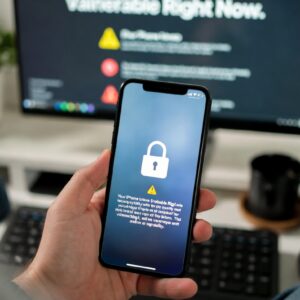
You’re holding a phone that costs over $1,000, and on the surface, it looks like Apple threw a bunch of upgrades at the wall to see what stuck. Twelve gigabytes of RAM? Barely mentioned. A completely redesigned thermal system? Ditched titanium for aluminum. A front camera that goes wider than ever? Sure, but why? Here’s the thing: I think Apple’s hardware is ahead of their software roadmap, and these phones are being built for features that don’t exist yet.
The Mystery of Apple’s iPhone 17 Pro Strategy
When Apple announced the iPhone 17 Pro lineup, something felt off. The company was oddly silent about specs that should have dominated the conversation. Twelve GB of RAM is a 50% jump from previous Pro models—that’s massive. Yet Apple barely whispered about it during the keynote. Instead, they obsessed over thermal performance, completely abandoning their signature titanium material to pack in more heat-conductive aluminum and a new vapor chamber system.
The internet collectively scratched its head. Why all this focus on cooling if there’s no 8K video recording? Why the bigger batteries if the phones aren’t dramatically faster in daily use? Why redesign the entire back of the phone around thermal management when iOS 18 doesn’t seem to demand it?
I spent weeks testing these devices, and the answer became clear: Apple isn’t building these phones for today. They’re building them for tomorrow.

Camera Excellence: The Reliable Workhorse
Let’s start with what actually impressed me most—the cameras. And here’s the thing: no single component is revolutionary. Instead, Apple has orchestrated a symphony of smaller improvements that create something genuinely reliable.
The 48MP Triple Sensor Setup
The iPhone 17 Pro features three 48-megapixel sensors that work together intelligently. This isn’t about raw megapixels; it’s about smarter processing. You get:
- Consistent low-light performance across day and night shooting
- Reliable portrait mode that maintains crispness even with digital zoom
- Adaptive focusing that chooses the right lens automatically
The difference compared to the iPhone 16 Pro is subtle but meaningful. You feel confident taking any shot in almost any lighting condition. That’s not flashy, but it’s valuable.
The Ultrawide Front Camera Revolution
Here’s where Apple made a genuinely smart move. The front camera now goes significantly wider without losing detail when you shoot close-up. This single change transforms FaceTime calls—you can actually fit two people on your side of the screen without constantly flipping back and forth.
If you’ve been doing the awkward dance of repositioning your phone every five seconds during video calls for the past decade, you’ll appreciate this more than any spec sheet can convey.
ProRes RAW: The Nerd’s Dream
For video enthusiasts, the ability to record ProRes RAW directly from the camera app is genuinely impressive. This isn’t higher resolution video—it’s the purest form of a video file. You get unlimited ability to adjust color, exposure, and white balance with practically zero quality loss.
Shot a scene that looks too warm? Flip the white balance completely in post-production. This level of control was previously reserved for professional cinema cameras.
The 4x Telephoto Asterisk
Here’s where the camera story gets complicated. The new 48MP 4x telephoto lens sounds impressive on paper, but it has a significant limitation: it can’t focus on close objects. The phone constantly switches you back to the main camera even when you’re zoomed in. At maximum zoom, sometimes you notice the improvement, sometimes you don’t.
This feels more like a software limitation than a hardware one—suggesting Apple might unlock its full potential in a future update.
Battery Life: The Healthy Upgrade (With Caveats)
Battery improvements are where the iPhone 17 Pro shows its age-appropriate thinking. I sat down yesterday at 3 p.m. with 80% battery remaining on my Pro Max and genuinely wondered what to do with all that juice. That’s the position you want to be in when you’re spending over $1,000 on a phone.
Real-World Battery Performance
The improvements vary depending on your region:
| Factor | eSIM Only (US) | Physical SIM (Europe/India) |
|---|---|---|
| Battery Improvement | 12-15% | 6% |
| Long-term Impact | Feels a full year newer | Modest improvement |
| Practical Difference | Noticeable by year-end | Minimal daily difference |
The eSIM-only version gets a significant boost because it eliminates the physical SIM slot, freeing up space for battery. That 7-8% difference between versions might seem small, but over time it compounds—the difference between your battery feeling fresh or degraded after a year of use.
Charging Speed Improvements
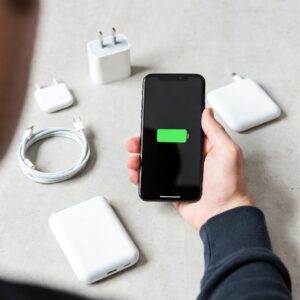
Fast charging has historically been Apple’s weakness. The iPhone 17 Pro changes this slightly. Using a MacBook Power Brick, both the regular Pro and Pro Max reach nearly full charge in about one hour. It’s not the fastest on the market, but it’s faster than the previous generation—even though these phones have larger batteries.
iOS 18 Battery Impact
I was genuinely worried that iOS 18’s new lighting effects and spatial features would drain battery aggressively. Surprisingly, that hasn’t materialized. The software is reasonably optimized, even if it feels unpolished in other ways.
Design: Beautiful Controversy and Practical Trade-offs
The iPhone 17 Pro’s physical design has become polarizing. Some people think these phones look atrocious. I think they’re genuinely refined, though I understand the criticism.
The Controversial Orange Finish
The new orange color has become the most divisive Pro iPhone finish ever. I get why people find it bold—it’s definitely not minimalist. But here’s the thing: that boldness exists for a reason. The metal wraps around the sides smoothly, and the camera plateau design isn’t just aesthetic—it’s functional.
Why the Design Changed
Apple ditched titanium for aluminum specifically to improve thermal performance. The new material conducts heat more efficiently, allowing it to spread across the back of the phone instead of concentrating in one hot spot. The camera plateau, which some people criticize as ungainly, actually serves multiple purposes:
- Better antenna bands for improved signal strength
- Improved balance on tables
- Heat distribution across a larger surface area
- Unique visual identity that helps you recognize your phone
It’s like choosing an SUV over a sports car—you sacrifice minimalism but gain practical benefits.
The Scratch Resistance Problem
Here’s the significant asterisk: these phones scratch more easily than the titanium iPhone 16 Pro. I tested this directly. Using a key on the titanium model, I couldn’t get a permanent mark. On the aluminum iPhone 17 Pro, the same key left visible scratches quickly.
Two things mitigate this:
- The silver color shows scratches far less noticeably than other finishes
- A quality case like the Taurus Q3 Air (engineered with real airbags and a rotating magnetic stand) provides serious protection
Screen Durability: The Skeptical Take
Apple claims three times better scratch resistance on the screen. I’m skeptical. Testing the iPhone 16 Pro screen with various metal objects, I had to torture it extensively with screws, keys, and knives before getting a mark. With the iPhone 17 Pro screen, a hardness pick created a noticeable mark in about 10 seconds.
Apple’s “three times” claim likely applies to very specific situations with trade-offs. It’s not magic—your screen will still scratch over time if you’re not careful.
The Microphone-Speaker Swap
One odd change: the speaker and microphone positions have swapped. The upside? You’re less likely to block your microphone during calls. The downside? You’re more likely to block your speaker when watching videos. It’s a strange trade-off that benefits one use case at the expense of another.
Performance: Power You Won’t Notice (Yet)
The A19 Pro chip is genuinely fast. Here’s the problem: you won’t feel it in daily use. In fact, iOS 18’s animations sometimes feel slower than before.
Where Performance Shines
The real performance gains appear in fringe cases:
- Gaming: Running demanding 3D games like Destiny at full 120 frames per second is genuinely mind-blowing
- Video processing: ProRes RAW editing and export happens noticeably faster
- AI tasks: The new neural accelerators handle on-device processing efficiently
The Thermal Advantage
Under a thermal camera, the difference is striking. The iPhone 16 Pro gets white-hot in the logic board area. The iPhone 17 Pro stays mildly warm across the entire back. This matters for:
- Short-term longevity: Games run smooth, phone stays comfortable to hold
- Long-term health: Battery and chip lifespan improve with better heat management
- Screen brightness: Cooler operation means the display maintains peak brightness longer
The RAM Mystery
Twelve GB of RAM is a 50% increase, yet Apple barely mentioned it. Why? Likely because iOS doesn’t need it yet. This is hardware preparing for software that’s coming—probably AI features that demand significant processing power.
Display: Brighter, Glare-Resistant, and Subtly Better
The iPhone 17 Pro screen is noticeably brighter outdoors. Sitting outside with reflective objects nearby, you feel the difference immediately. The new anti-reflective coating reduces glare significantly.
The Display Specs That Matter
- Peak brightness: Increased for outdoor visibility
- Anti-reflective coating: Reduces annoying light reflections
- Spatial features: iOS 18’s lock screen effects look genuinely impressive (when they work smoothly)
Screen Protector Consideration
If you want maximum glare reduction, Taurus’s Oriama screen protector applies an additional anti-reflective coating. The application process is genuinely idiot-proof—you drop your phone into their contraption, and it applies the protector perfectly. The glare reduction is noticeable even on the iPhone 16 Pro, and even more dramatic on the 17 Pro.
The Real Story: Apple Intelligence Is Coming
Everything about the iPhone 17 Pro’s configuration points to one conclusion: these phones are primarily designed for heavy on-device Apple Intelligence features that haven’t been announced yet.
Why This Matters
Apple’s hardware development has outpaced their software development. The company faced delays rolling out AI features, so they built phones that are ready for capabilities that don’t exist in iOS 18 yet.
What This Means for You
- The extra RAM will handle demanding AI tasks
- The thermal system will keep AI processing cool
- The neural accelerators will power on-device AI efficiently
- The battery capacity will sustain intensive AI operations
When Apple does a major Siri and AI overhaul—most likely next year—the iPhone 17 Pro will become the poster child for experiencing these features optimally.
Should You Upgrade? The Honest Answer
The iPhone 17 Pro is good enough. Battery life improves noticeably (especially in eSIM-only regions). The camera experience is more reassuring. Performance is genuinely fast. But should you rush to upgrade?
When the iPhone 17 Pro Makes Sense
Scenario 1: You want a plus-sized phone
The Plus model is gone. If you want a larger screen and battery, the Pro Max is your only option. In eSIM-only countries, that battery advantage is substantial.
Scenario 2: You’re a power user who needs future-proofing
If you plan to keep this phone for 4+ years and want it ready for demanding AI features, the extra RAM and thermal performance justify the cost.
When to Skip the Upgrade
The base iPhone 17 is now $300 cheaper and includes 256GB storage plus nearly all Pro features. Unless you specifically need the larger size or maximum performance, the standard model is genuinely compelling.
Apple knows this. That’s why they’re offering 2TB storage on the Pro Max at $2,000—they’re targeting power users willing to pay significantly more for that extra 5% of capability.
The Verdict: Patience Might Be Smarter
The iPhone 17 Pro is a solid phone. The cameras are reliable. Battery life is respectable. Performance is overkill for current software. Design is refined (if controversial).
But here’s my honest take: these phones feel like they’re waiting for something. The thermal system, the extra RAM, the neural accelerators—they’re all configured for features that don’t exist yet.
If you’re on an iPhone 16 Pro, there’s no urgent reason to upgrade. If you’re on an iPhone 15 or older, the camera improvements and battery life justify the jump.
But if you can wait until next year when Apple announces what these phones are actually built for? That might be when the iPhone 17 Pro finally makes complete sense.
Key Takeaways
- Cameras are excellent but the 4x telephoto has limitations
- Battery improves 6-15% depending on your region and SIM type
- Design is refined but scratches more easily than titanium
- Performance is powerful but won’t feel faster in daily use
- These phones are built for AI features that don’t exist yet
- The base iPhone 17 might be the smarter choice for most people