Disclaimer: This article is for educational purposes only. The information provided is intended to help readers understand cybersecurity threats and protect themselves. It does not constitute professional financial, legal, or security advice. Always consult a qualified cybersecurity professional for personalized guidance.
Shocking Ways Hackers Access Your Bank Via Phone
Your phone is the new ATM, and someone might already have the PIN.
You lock your front door. You check your credit card statement. You feel reasonably safe. But while you were doing all that, a hacker halfway around the world may have slipped into your bank account through the device sitting on your nightstand.
This is not a scare tactic. This is Tuesday.
Mobile banking fraud is growing at a pace that has security experts genuinely alarmed. According to the FBI’s Internet Crime Complaint Center, Americans lost over $10 billion to cybercrime in a single recent year, with mobile-based attacks driving a significant and rising share of those losses. And the worst part? Most victims had no idea anything was wrong until the money was already gone.
The reason hackers love your phone is straightforward: it holds everything. Your banking app, your email (which resets your banking password), your two-factor authentication codes, your saved passwords, your contact list, your location. Your phone is not just a communication device anymore. It is a master key to your financial life, and hackers know it better than most of us do.
What makes this especially unsettling is that the most effective attacks do not require sophisticated technology. They require your trust, your habits, and your split-second decisions. A text that looks like it is from your bank. A public Wi-Fi network at a coffee shop. An app that seems totally legitimate. The most dangerous tools hackers use are often invisible.
This article walks you through the most common, most clever, and most financially destructive ways hackers are accessing bank accounts through phones right now. Not to frighten you, but to arm you. Because once you know how the tricks work, they stop working.

How Hackers Use Your Phone to Access Your Bank Account: The Full Picture
Before diving into specific methods, it helps to understand why mobile devices have become the primary attack surface for financial fraud.
Ten years ago, most people managed their banking through desktop computers at home. Today, over 80% of Americans use mobile banking apps, and many do the majority of their financial activity entirely on their phones. That shift did not go unnoticed by cybercriminals.
Your phone is also different from your laptop in one critical way: it is always with you, always connected, and you interact with it dozens of times a day, often quickly and without much deliberation. That pace and frequency create opportunities for mistakes. Hackers do not need to build elaborate systems to exploit you. They just need you to tap the wrong link once.
Here is the other uncomfortable truth: mobile operating systems, while generally secure, are only as safe as the apps running on them and the decisions the person holding the device makes. A locked vault is useless if someone hands over the combination.
SIM Swapping: The Hack That Starts With a Phone Call
SIM swapping is one of the most devastating mobile banking attacks in circulation, and it works by targeting your phone carrier rather than your phone directly.
Here is how it plays out. A hacker gathers basic personal information about you, often from social media or data breaches. Armed with your name, phone number, last four digits of your Social Security number, and maybe your billing address, they call your mobile carrier pretending to be you. They claim they got a new phone and need to transfer your number to a new SIM card. If the carrier’s customer service representative falls for it, your phone number now routes to the hacker’s device.
Once they have your number, two-factor authentication becomes their asset, not your protection. Every SMS code your bank sends to verify your identity goes straight to them. They request a password reset on your banking app, receive the confirmation code, and walk right in.
The terrifying efficiency of this attack is that you will not notice it happening until your phone loses service. That dead signal is often the first sign your number has been stolen.
How to protect yourself:
- Set up a carrier PIN or passcode specifically for account changes. Most major carriers offer this.
- Ask your carrier to add a port freeze or SIM lock to your account.
- Move away from SMS-based two-factor authentication where possible and use an authenticator app like Google Authenticator or Authy instead.
- If your phone suddenly loses all service for no apparent reason, call your carrier immediately from another phone.
High-profile cases have made headlines repeatedly. Crypto investors have lost millions through SIM swapping, and ordinary bank customers are targeted just as often. The method is simple, effective, and deeply frustrating because the vulnerability lives with your phone carrier, not your bank.
Smishing: The Text Message That Empties Accounts
Smishing combines the words “SMS” and “phishing,” and it is exactly what it sounds like. Hackers send text messages designed to look like they are from your bank, your carrier, a delivery service, or a government agency, with the goal of tricking you into handing over your login credentials or clicking a malicious link.
The messages have gotten frighteningly convincing. Modern smishing texts match the formatting, tone, and even the sender ID of legitimate messages from real institutions. Some even appear in the same conversation thread as previous genuine messages from your bank, which happens because criminals spoof the same alphanumeric sender ID.
A typical smishing scenario goes like this: you receive a text saying your bank account has been temporarily suspended due to suspicious activity. There is a link. The link goes to a website that looks exactly like your bank’s login page. You enter your username and password. The hacker now has them.
Red flags to watch for in smishing texts:
- Urgent language designed to trigger panic (“Your account will be closed in 24 hours”)
- Links that do not match your bank’s actual domain (look carefully at every character)
- Requests for passwords, PINs, or one-time codes via text
- Messages asking you to call a number listed in the text rather than the number on your card
- Generic greetings that do not use your name
Your bank will never ask for your PIN or password via text. Full stop. No exceptions. If a message asks for that information through any channel other than you logging in directly to their verified app or website, treat it as an attack.
Malicious Apps: The Trojan Horses Living on Your Screen
Not every app in the app store is what it claims to be. Malicious apps disguised as useful tools, games, productivity software, or even fake banking apps represent one of the most persistent and underreported threats to mobile banking security.
Some malicious apps are built specifically to steal banking credentials. Called banking trojans, these apps often mimic the interface of real banking applications. When you “log in,” you are entering your credentials directly into the hacker’s collection system. The app may even display a convincing error message and then redirect you to the real app, so you assume nothing strange happened and try again with your real login.
Other malicious apps use overlay attacks, where they detect when you open a legitimate banking app and instantly place a fake login screen on top of it. From the outside, it looks exactly like your bank’s app. Everything you type goes to the attacker.
Beyond banking trojans, general spyware and keyloggers capture everything you type across all apps and send it back to bad actors. If you have one of these on your phone and you type your banking password anywhere, that password is compromised.
How malicious apps get onto your phone:
- Third-party app stores outside the official Apple App Store or Google Play
- Clicking a download link in a phishing email or smishing text
- Disguised as useful tools with names like “Battery Saver Pro” or “Free VPN Turbo”
- Apps that were legitimate but were later purchased and turned malicious by new owners
The defense here is disciplined. Only download apps from official stores. Check reviews carefully, especially one-star reviews that describe unexpected behavior. Look at the permissions an app requests; a flashlight app does not need access to your contacts or microphone. And if an app asks for accessibility permissions, treat that request with extreme suspicion, because those permissions give apps deep control over your device.
Public Wi-Fi Interception: The Coffee Shop Ambush
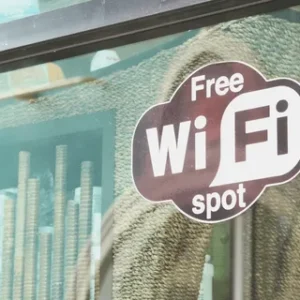
Free Wi-Fi is one of the great conveniences of modern life and one of its more dangerous traps. When you connect to a public Wi-Fi network, whether at a café, an airport, a hotel lobby, or a shopping mall, you are sharing a network with strangers. Some of those strangers may be hackers running what are called man-in-the-middle attacks.
In a man-in-the-middle attack, a hacker positions themselves between your device and the internet. Your data flows through their system before reaching its destination. If that data is not encrypted end-to-end, they can read it, capture it, and modify it. That includes login credentials, session tokens, and any banking activity you conduct on that network.
Some attackers go further by setting up fake Wi-Fi hotspots. They give the network a plausible name like “CoffeeShop_Guest” or “Airport_Free_WiFi” and wait for people to connect. Once you are on their network, they have full visibility into your unencrypted traffic.
Most banking apps encrypt their connections through HTTPS, which provides a meaningful layer of protection. But not all apps or all browsers enforce this consistently, and sophisticated attackers have ways to attempt SSL stripping, which downgrades connections to unencrypted versions.
Simple rules that significantly reduce your risk:
- Avoid logging into your bank account on public Wi-Fi entirely if you can wait until you are on a trusted network.
- If you must use public Wi-Fi, connect through a reputable VPN first. A VPN encrypts all traffic leaving your device, making interception dramatically harder.
- Turn off auto-connect for Wi-Fi networks on your phone. You should manually choose networks, not let your phone join them automatically.
- Use your mobile data connection for banking when in public. It is not perfectly secure, but it is substantially safer than open Wi-Fi.
The attack sounds technical, but the setup is often surprisingly simple. Security researchers have demonstrated that a basic man-in-the-middle rig can be assembled with consumer hardware and free software in under an hour. You do not need to be paranoid about every coffee shop, but you do need a policy and stick to it.
Spyware and Phone Surveillance: When Someone Closer Is the Threat
Not all phone hacking comes from anonymous criminals overseas. A deeply uncomfortable reality of mobile banking security is that spyware is sometimes installed by people you know, and financial abuse tied to phone surveillance is a documented and growing problem.
Stalkerware, a category of surveillance software designed to hide from the device owner, can be installed on a phone with a few minutes of physical access. Once installed, it runs silently in the background, recording calls, capturing screenshots, logging keystrokes, and transmitting everything to whoever installed it. This includes passwords, banking session details, and one-time authentication codes.
Beyond intimate partner surveillance, commercial spyware tools marketed as “parental monitoring” software are regularly misused. Some are sold openly, with full capabilities to capture banking credentials without the device owner’s knowledge.
State-sponsored spyware like Pegasus, developed by Israeli firm NSO Group, operates at an even more sophisticated level, capable of compromising a device with zero clicks, meaning no link to tap, no app to install. The target simply receives a message and the device is compromised. While this level of attack is generally reserved for high-value targets such as journalists, activists, and executives, its existence illustrates just how far phone surveillance technology has advanced.
Signs your phone may have spyware installed:
- Battery drains much faster than usual without explanation
- Phone runs warm even when idle
- Higher than normal mobile data usage
- Phone behaves sluggishly or reboots unexpectedly
- Screen activates on its own when the phone is idle
If you suspect spyware, a factory reset is the most reliable way to remove it. Before doing that, document what you observe and consider reaching out to a cybersecurity professional, particularly if you believe the threat comes from someone in your personal life.
Phishing Calls and Vishing: When the Hacker Sounds Completely Legitimate
Voice phishing, known as vishing, works exactly the way old-fashioned phone fraud always has, except now it is powered by spoofed caller IDs, AI-generated voices, and data harvested from previous breaches. The result is phone calls that are almost indistinguishable from real ones.
You pick up and hear someone explaining they are from your bank’s fraud department. They know your name. They know the last four digits of your card. They reference a transaction that happened recently. They sound professional, calm, and genuinely helpful. They tell you there is suspicious activity on your account and they need to verify your identity to protect it. They ask for your PIN, your one-time code, or your online banking password.
That is the scam.
Real bank employees will never ask for your PIN or password over the phone. That is not a policy that varies by bank. It is a universal standard across the entire financial industry. If anyone calling you, however convincingly, asks for those credentials, hang up immediately.
The sophistication of these calls has increased dramatically with AI. Voice cloning tools can now generate a convincing replica of a real person’s voice with as little as three seconds of sample audio. There have been documented cases where criminals cloned the voice of a company executive to authorize fraudulent wire transfers. That technology is trickling down.
What to do when you get a suspicious call claiming to be from your bank:
- Hang up immediately and call the number on the back of your debit or credit card, or the official number on your bank’s website.
- Do not call back any number the caller provides; that number routes back to the fraudster.
- Do not feel pressured by urgency. Legitimate bank fraud teams will not penalize you for taking time to verify independently.
- Report the call to your bank and to the FTC at reportfraud.ftc.gov.
According to research from the Federal Trade Commission on top consumer fraud reports, phone-based impersonation scams consistently rank among the highest-loss fraud categories reported by consumers. The combination of caller ID spoofing and social engineering makes vishing one of the hardest attacks to defend against because it exploits human trust, not technical vulnerabilities.
Two-Factor Authentication Bypass: When Your Safety Net Gets Cut
Two-factor authentication, commonly called 2FA, is widely and correctly promoted as one of the most effective defenses for online accounts. The idea is sound: even if someone steals your password, they cannot get in without that second factor, usually a code sent to your phone. The problem is that hackers have developed several reliable methods to bypass it.
The most common bypass for SMS-based 2FA is, as covered earlier, SIM swapping. But there are other methods worth understanding.
Real-time phishing attacks use automated tools that create a fake bank login page, capture your credentials the moment you enter them, instantly log in to your real bank account using those credentials, and then request the 2FA code your bank sends. A prompt appears on the fake site asking for your one-time code. You enter it. The hacker submits it on the real site before it expires. Access granted.
This entire process can happen in under 60 seconds. The fake site relays information in real time between you and your actual bank, which means everything looks authentic because in a sense it is. You are seeing real responses from your real bank, just routed through the attacker’s infrastructure.
SS7 attacks represent a more technically complex bypass, exploiting vulnerabilities in the global telecommunications signaling system to intercept SMS messages in transit. While this type of attack requires more resources and technical capability, it has been demonstrated publicly by security researchers multiple times.
Upgrading your 2FA setup:
- Switch from SMS-based codes to an authenticator app. Apps like Authy or Google Authenticator generate codes locally on your device and are not interceptable via SS7 or SIM swapping.
- Where available, use hardware security keys for your most sensitive accounts. These physical devices require physical possession to authenticate.
- Enable login notifications from your bank so you receive an alert any time someone accesses your account.
- Use unique, strong passwords for your banking accounts and never reuse them across other sites.
The shift from SMS to app-based authentication is one of the single most impactful changes you can make to your mobile banking security setup, and it takes about five minutes.
Data Breaches and Credential Stuffing: Your Old Passwords Coming Back to Haunt You
You might not think a data breach at a retail website has anything to do with your bank account. You would be wrong.
When hackers breach a company and steal millions of usernames and passwords, that data gets packaged and sold on the dark web. Cybercriminals then use automated tools to try those same credential combinations across hundreds of banking sites and financial apps. This is called credential stuffing. Because a staggering number of people reuse passwords, even partial matches yield significant results.
A password you used for a streaming service three years ago might still be your banking password today. If that streaming service was breached, your banking account could be next.
Cybersecurity analysts at Verizon’s annual Data Breach Investigations Report have repeatedly found that stolen credentials represent one of the most common pathways in confirmed data breaches across industries. The scale of available stolen credentials is enormous. Several dumps have contained over a billion username and password pairs.
How to break the credential stuffing chain:
- Use a unique, randomly generated password for every account you have. Yes, every one.
- Use a password manager. Tools like Bitwarden, 1Password, or Dashlane generate and store complex unique passwords so you only need to remember one master password. They are worth every penny.
- Check if your email addresses have appeared in known breaches at Have I Been Pwned (haveibeenpwned.com), a free and widely trusted tool.
- Enable login alerts on your bank accounts so you are notified of any access, successful or failed.
The reason credential stuffing works at scale is automation. Bots can attempt thousands of logins per minute. Your job is not to be one of the easy ones. A unique password for your banking account means a breach at some other company cannot touch your finances.
Fake Banking Apps: The Imposters Waiting in the Store
This deserves its own section separate from general malicious apps because the threat is specific and particularly effective. Fake banking apps are applications built to impersonate real financial institutions, sitting in app stores and waiting for customers of that bank to accidentally download them instead of the real thing.
These apps are often sophisticated enough to pass initial review. They may display real bank branding, include functional-looking interfaces, and behave exactly as you would expect a real banking app to behave, right up until they have your login credentials and redirect you to an error message.
Cybercriminals track banking app search terms and time their fake app releases around periods when the real bank is updating its app or running advertisements, counting on confused or new customers to grab the wrong one. In some cases, fake apps have accumulated thousands of downloads and hundreds of reviews before being removed.
The risk is not limited to smaller or lesser-known banks. Major financial institutions have had fake versions of their apps circulate through official and unofficial stores at various times.
How to make sure you have the real app:
- Always navigate to your bank’s official website first and follow the download link from there to the app store. Do not search for the app directly in the store.
- Check the developer name carefully. The real Chase app is from JPMorgan Chase. If the developer listed is anything different, do not download it.
- Look at the total number of reviews and the download count. Fake apps rarely have millions of legitimate reviews.
- If you notice anything unusual about the app’s behavior after downloading, such as unexpected permission requests or login errors, delete it immediately and contact your bank.
This threat is particularly cruel because it exploits the very action, downloading your bank’s app, that banks encourage for better security. Verify before you download, and always start from a trusted source.
Comparison Table: Traditional vs. Mobile-Threat-Aware Banking Security
| Security Behavior | Traditional Approach | Threat-Aware Approach |
|---|---|---|
| Two-factor authentication | SMS code to phone number | Authenticator app or hardware key |
| Password strategy | One memorable password reused | Unique random passwords via password manager |
| Wi-Fi usage for banking | Any available network | Mobile data only, or verified VPN |
| App downloads | Search in app store | Navigate from bank’s official website |
| Response to urgent texts | Click link and verify | Delete; call bank using number on card |
| Phone carrier security | Default settings | Carrier PIN + SIM lock enabled |
| Breach monitoring | None | Regular checks on haveibeenpwned.com |
| Login notifications | Off | On for all financial accounts |
| Device spyware check | Never | Periodic review of battery and data usage |
| Suspicious call handling | Engage with caller | Hang up; call official number independently |
Print this table. Screenshot it. The gap between these two columns is the gap between where most people are and where they need to be.
What to Do Right Now If You Think Your Account Has Been Compromised
Knowing the threats is important. Knowing how to respond if you are already a target is equally critical.
Speed matters enormously in banking fraud. The sooner you act, the more likely you are to stop the damage and recover lost funds. Most banks have fraud protection policies that work in your favor if you report quickly.
Immediate steps if you suspect your account has been accessed:
- Call your bank’s fraud hotline immediately using the number on the back of your card or on their official website. Do not use any number provided in a suspicious message.
- Request a freeze on your account. This stops any further transactions while the investigation begins.
- Change your banking password from a trusted, secure device, preferably one that has not been connected to any suspicious network or had any unknown apps installed.
- Review recent transactions carefully and flag every unfamiliar one, no matter how small. Hackers often start with tiny test transactions before making larger withdrawals.
- Contact your mobile carrier to check for any unauthorized SIM changes or account modifications.
- File a report with the FBI’s Internet Crime Complaint Center at ic3.gov. This creates an official record and helps track patterns.
- Notify the three major credit bureaus (Equifax, Experian, TransUnion) and consider placing a fraud alert or credit freeze on your accounts.
The window between account compromise and significant financial damage is often surprisingly short. Having this checklist ready before you ever need it is not pessimism. It is preparation.
The Human Element: Why Awareness Is Your Best Security Tool
Every method described in this article has a technical component, but almost every attack ultimately relies on a human decision. A tap on a link. A response to a call. A password reused out of convenience. An app downloaded in a hurry.
This is not blame. The attacks are deliberately designed to catch people in moments of distraction, urgency, or trust. Understanding how they work is what lets you pause before you act, and that pause is often all the protection you need.
Cybersecurity experts consistently say that informed users are the most resilient security layer an organization or individual can have. Technology protects you up to a point. Your judgment covers the rest.
Share what you have learned here. Talk to your family members, especially older relatives who may not be as familiar with these threats. The more people who recognize a smishing text or understand why SIM swapping is dangerous, the harder these attacks become to execute at scale.
Your phone is extraordinary. It connects you to your money, your people, your work, and your world. Protect it like what it is: the most important device you own.
Conclusion
Hackers accessing bank accounts through phones is not a future threat. It is happening right now, to real people, often in the most ordinary moments of their day. A text at lunch. A free Wi-Fi connection at the airport. An app downloaded last Tuesday.
The good news is that most of these attacks are preventable with a combination of awareness and a handful of changes to habits you probably already have. Switch to an authenticator app. Set a carrier PIN. Use a password manager. Never click a link in a financial text message. Verify before you download.
None of this requires technical expertise. It requires knowing what to look for and making a decision, the same kind of decision you already make every day. Just a more informed one.
Your bank account is yours. Keep it that way.
Share This With Someone Who Deserves to Know
If someone you care about banks on their phone (and at this point, who does not?), send them this article. You might save them a very bad day.
Read Next:
- How to Set Up a Password Manager in Under 10 Minutes
- The Complete Guide to Securing Your Smartphone in 2026
- What to Do After a Data Breach: A Step-by-Step Recovery Plan
Drop a comment below: Have you or someone you know experienced mobile banking fraud? What happened, and what did you learn from it? Your experience might help someone else avoid the same trap.