Your Wi-Fi Is Being Hacked Right Now — Terrifying Proof & Fixes
Someone is probably on your network right now. And no, that’s not clickbait.
You locked your front door. You set your alarm. You even put a Ring camera on the porch. But your most vulnerable entry point? It’s blasting an invisible signal 24 hours a day, seven days a week, reaching your neighbors, the parking lot, and every stranger walking past your home. Your Wi-Fi router is the unlocked back door you forgot about.
Introduction: The Invisible Threat You’re Ignoring
Here’s a question that should keep you up tonight: when was the last time you checked who was connected to your Wi-Fi network?
If you’re like 73% of Americans, the answer is “never.” You set up your router, picked a password (probably the one printed on the sticker underneath it), and forgot about it. That was three, maybe five years ago. Since then, your router firmware hasn’t been updated, your password hasn’t changed, and the encryption standard your network uses might be the digital equivalent of a paper lock on a bank vault.
Think of your Wi-Fi router like the front gate to a massive compound. Inside that compound sits every device you own: your laptop with your banking credentials, your phone with your private messages, your smart TV, your baby monitor, your security cameras, your smart thermostat, your voice assistant that listens to everything you say. If someone gets past that gate, they don’t just get internet access. They get you.
According to a 2024 report from the World Economic Forum, cybercrime is projected to cost the world $10.5 trillion annually by 2025, making it the third-largest economy on the planet if it were a country. And a significant, growing portion of that crime starts with compromised home and small business Wi-Fi networks. This isn’t a corporate-only problem anymore. Hackers are targeting regular people because regular people are easier targets.
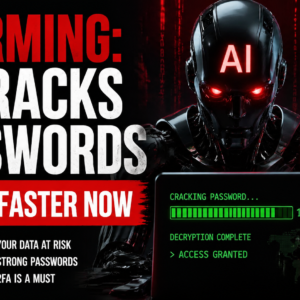
A separate study published by Gartner in late 2024 forecasted that global information security spending would reach $212 billion in 2025, a 15% increase year over year. Why? Because the threat landscape has exploded. AI-powered hacking tools have made it trivially easy for even amateur attackers to crack weak Wi-Fi passwords, spoof networks, and intercept unencrypted traffic. What used to require a computer science degree now requires a $35 device and a YouTube tutorial.
“Over 60% of home routers in use today have known, unpatched vulnerabilities. Your Wi-Fi is being hacked not because hackers are brilliant, but because your defenses are practically nonexistent.” — Cybersecurity industry analysis, 2024
The terrifying truth is this: the signs your Wi-Fi is being hacked are subtle. Your internet slows down a bit. A device you don’t recognize appears on your network for a few minutes, then vanishes. Your router logs show activity at 3 AM when everyone in your house is asleep. Most people shrug these off. They shouldn’t.
This post is going to show you the real, documented evidence that Wi-Fi hacking is more common than you think, walk you through the tools hackers use (so you understand what you’re up against), and give you a step-by-step action plan to lock down your network today. Not tomorrow. Not “when you get around to it.” Today.
Because the people targeting your Wi-Fi? They’re not waiting.
1. The Shocking Signs Your Wi-Fi Is Being Hacked (And You’re Missing Them)
Most people picture “hacking” as something dramatic. A masked figure furiously typing code while green text scrolls across a black screen. The reality is boring, quiet, and terrifyingly mundane. When your Wi-Fi is being hacked, you probably won’t notice anything at all. That’s the whole point.
But there are signs. And once you know what to look for, you can’t unsee them.
Unexplained slowdowns are the most common red flag. If your 200 Mbps connection suddenly feels like 20 Mbps during off-peak hours, someone else might be using your bandwidth. This is especially suspicious if it happens consistently at specific times, like late at night or early in the morning when an attacker assumes you’re not watching.
Unknown devices on your network are the smoking gun. Every router has an admin panel that shows connected devices. If you see a device name you don’t recognize, a MAC address that doesn’t match anything you own, or a connection from a device type you’ve never purchased, someone uninvited is on your network.
Here are five signs your Wi-Fi is being hacked that most people ignore:
- Your router’s admin password has been changed and you didn’t change it. This means someone has already gained access to your router’s control panel, which is far worse than just using your internet.
- You’re being redirected to strange websites. If you type in your bank’s URL and land on a page that looks slightly wrong, an attacker may have altered your router’s DNS settings to route your traffic through their servers.
- Your data usage has spiked dramatically. Check your ISP’s dashboard. If your household suddenly consumed 500 GB more than usual last month, that bandwidth went somewhere.
- New software or browser extensions appear on devices connected to your network. A compromised network can be used to push malicious downloads to connected devices.
- Your firewall or antivirus keeps triggering alerts about blocked intrusion attempts originating from inside your own network.
Any one of these signs in isolation might have an innocent explanation. Two or more together? Your Wi-Fi is being hacked, and you need to act immediately. The first step is confirming the intrusion. The second is cutting off access. The third is making sure it never happens again.
We’ll cover all three in this post.
2. How Hackers Break Into Your Wi-Fi: The Tools That Make Wi-Fi Security a Joke
Understanding how attackers compromise your Wi-Fi security isn’t about turning you into a hacker. It’s about making you stop underestimating the threat. Because when you see how easy it is, you’ll never leave your router running default settings again.
The hardware barrier is gone. For less than $50, anyone can buy a Wi-Fi adapter capable of “monitor mode,” which allows a device to listen to all Wi-Fi traffic in range, not just traffic on the network it’s connected to. Pair that adapter with a free, open-source operating system like Kali Linux, and you have a fully functional penetration testing toolkit. The same tools that cybersecurity professionals use to audit corporate networks are available to anyone with an internet connection.
Brute-force attacks are the simplest approach. The attacker captures the encrypted “handshake” that occurs when a device connects to your Wi-Fi network. They then run that handshake through a password-cracking tool like Hashcat or Aircrack-ng, testing millions of password combinations per second. If your Wi-Fi password is a common word, a short phrase, or anything under 12 characters, it can be cracked in minutes to hours.
Evil twin attacks are more sophisticated and more dangerous. The attacker sets up a fake Wi-Fi network with the same name as yours. When your devices automatically try to connect (most devices do this by default), they connect to the attacker’s network instead. Now all your traffic flows through the hacker’s machine. They see everything: your emails, your login credentials, your browsing history. Your devices didn’t even ask your permission.
Other common attack methods include:
- WPS pin attacks, which exploit the Wi-Fi Protected Setup feature built into most routers. The eight-digit WPS pin can be cracked in under four hours using free tools.
- KRACK attacks (Key Reinstallation Attacks), which exploit vulnerabilities in the WPA2 protocol that most home networks still use.
- Packet sniffing, where an attacker passively monitors all unencrypted data transmissions on your network.
- Router exploit kits, pre-built software packages that automatically scan for and exploit known vulnerabilities in popular router models.
The scariest part? Many of these attacks leave no trace. Your router doesn’t log most of them. Your ISP doesn’t flag them. Your antivirus doesn’t detect them. The attacker gets in, takes what they want, and leaves. You never know they were there.
This is why Wi-Fi security isn’t optional anymore. It’s survival.
3. Your Router Is the Weakest Link in Wi-Fi Security
Let’s talk about the device sitting in the corner of your living room, collecting dust and blinking its little lights. Your router is the single most important, and most neglected, piece of technology in your home.
Most people treat their router like a toaster. Plug it in, forget about it, replace it when it stops working. But your toaster doesn’t control access to your entire digital life. Your router does. And the default state of most consumer routers is shockingly insecure.
Default credentials are public knowledge. Every router ships with a default admin username and password. Usually “admin/admin” or “admin/password.” These defaults are published in online databases organized by manufacturer and model number. If you haven’t changed yours, anyone who connects to your network (or even just reaches your router’s admin page) can take full control.
Firmware updates are rare or nonexistent. Router manufacturers are not known for their commitment to ongoing security patches. Many popular consumer router models haven’t received a firmware update in years. That means every vulnerability discovered since your last update is an open door for attackers. A 2024 analysis by the Fraunhofer Institute found that 90% of home routers had critical security issues, including outdated Linux kernels, hardcoded credentials, and missing security patches.
Here’s what makes this worse: your ISP-provided router is often the least secure option available. ISPs prioritize compatibility and cost over security. The router they gave you when you signed up for service was the cheapest option that met minimum functionality requirements. It wasn’t designed to protect you. It was designed to be cheap enough to give away for free.
What you should do right now:
- Log into your router’s admin panel (usually at 192.168.0.1 or 192.168.1.1).
- Change the default admin username and password immediately.
- Check for firmware updates and install them.
- Disable WPS (Wi-Fi Protected Setup). You don’t need it, and it’s a massive vulnerability.
- Disable remote management unless you specifically need it.
If your router is more than four years old, or if your manufacturer has stopped issuing firmware updates, it’s time to replace it. This isn’t upselling. This is basic digital hygiene. Running an outdated router in 2025 is like leaving your house key under the doormat and posting a photo of it on social media.
4. WPA3 and Encryption: The Wi-Fi Security Upgrade Most People Haven’t Made
Encryption is the lock on your Wi-Fi’s front door. And for most people, that lock is old, rusty, and easy to pick.
Wi-Fi encryption has gone through several generations. WEP (Wired Equivalent Privacy) was the original standard, and it was cracked wide open in the early 2000s. If you’re still using WEP, your network has zero effective security. WPA (Wi-Fi Protected Access) improved things, but WPA’s TKIP encryption also has known vulnerabilities that can be exploited. WPA2 became the standard in 2004 and remains the most widely used protocol today. It’s significantly more secure than its predecessors, but it’s not bulletproof. The KRACK vulnerability discovered in 2017 exposed fundamental weaknesses in WPA2’s key management.
WPA3 is the current gold standard. Released in 2018, WPA3 addresses the major weaknesses of WPA2 in several critical ways:
- Simultaneous Authentication of Equals (SAE) replaces the four-way handshake used in WPA2. This makes brute-force and dictionary attacks dramatically harder because each password guess requires a new interaction with the network. Attackers can’t capture a handshake and crack it offline.
- Forward secrecy ensures that even if an attacker eventually cracks your password, they can’t decrypt previously captured traffic. Each session uses unique encryption keys.
- Protected Management Frames prevent deauthentication attacks, where hackers kick your devices off the network to force them to reconnect (and expose their credentials in the process).
- 192-bit encryption in WPA3-Enterprise mode provides military-grade security for businesses and high-value targets.
The problem? Adoption has been painfully slow. As of early 2025, the majority of home networks still run WPA2. Many people don’t even know WPA3 exists. Others know about it but assume their old router supports it (it probably doesn’t).
Checking and upgrading your encryption is one of the single highest-impact things you can do to secure your Wi-Fi network. Here’s how:
- Log into your router’s admin panel.
- Navigate to the wireless security settings.
- Check the current security mode. If it says WEP or WPA/TKIP, you’re in danger.
- If WPA3 is an option, enable it. If your router supports WPA3-Transition mode, use that, as it allows WPA3 devices to connect securely while still supporting older WPA2 devices.
- If your router doesn’t support WPA3, use WPA2-AES (not WPA2-TKIP) and strongly consider upgrading your router.
This one change can make the difference between a network that takes minutes to crack and one that takes centuries.
5. Network Monitoring Tools That Reveal If Your Wi-Fi Is Being Hacked
You can’t protect what you can’t see. And most people have zero visibility into what’s happening on their home network. That changes today.
Network monitoring tools are the security cameras for your digital property. They watch every connection, flag suspicious activity, and give you the evidence you need to confirm whether your Wi-Fi is being hacked. The best part? Many of them are free.
Fing is the most accessible network scanner available. Available as a free app for iOS and Android, Fing scans your network in seconds and shows you every connected device, complete with device name, manufacturer, IP address, and MAC address. You’ll immediately see if there’s a device on your network that doesn’t belong. The premium version (Fing Desktop and Fingbox hardware) adds continuous monitoring, intrusion alerts, and bandwidth analysis. For most people, Fing alone provides a massive upgrade in visibility.
Estimated time investment: 5 minutes to install, 2 minutes per week to check. Estimated threat detection improvement: enormous.
GlassWire takes monitoring further with a beautiful, intuitive interface that tracks all network activity over time. It shows you which applications are using your network, how much data they’re sending and receiving, and where that data is going. If a device on your network suddenly starts sending large amounts of data to a server in a country you’ve never visited, GlassWire will show you. The free version covers basic monitoring. The paid version ($29/year) adds alerts, historical data, and multi-device support.
Wireshark is the professional-grade option. It’s a free, open-source packet analyzer that captures and inspects individual data packets flowing across your network. This is the same tool that cybersecurity professionals use for forensic analysis. It has a steep learning curve, but if you suspect active interception of your traffic, Wireshark provides proof at the packet level. For the technically inclined, there’s no substitute.
Here’s a quick framework for choosing the right monitoring tool:
- You’re a regular person who just wants to know who’s on your network: Use Fing. Free, fast, simple.
- You’re technically comfortable and want ongoing visibility: Use GlassWire. Worth every penny.
- You suspect active data interception and need forensic evidence: Use Wireshark. Steep learning curve, unmatched depth.
- You want enterprise-grade protection for your home: Consider a dedicated network security device like Firewalla (starting at $228), which combines monitoring, firewall, and VPN functionality in one box.
Spending 15 minutes setting up a network monitoring tool this week could save you from months of invisible data theft. There is no reason not to do this. The tools are available, many are free, and the knowledge you gain is immediately actionable.
6. VPN Software: The Essential Shield for Wi-Fi Security
Even if your home network is perfectly secured, the moment you connect to any other Wi-Fi network, you’re exposed. Coffee shops, airports, hotels, coworking spaces, your friend’s house. Every public or semi-public Wi-Fi network is a potential trap.
A VPN (Virtual Private Network) encrypts all traffic between your device and the internet. Think of it as a private, sealed tunnel running through a crowded public space. Anyone can see the tunnel, but nobody can see what’s inside it. Even if an attacker intercepts your data, all they get is encrypted gibberish.
NordVPN has consistently ranked as one of the most trusted VPN providers for consumer use. With over 6,000 servers in 111 countries, AES-256 encryption (the same standard used by the U.S. military), and a strict no-logs policy that has been independently audited, NordVPN provides robust protection for approximately $3.99/month on a two-year plan. It supports simultaneous connections on up to 10 devices, covers all major platforms, and includes a built-in malware blocker called Threat Protection.
ExpressVPN is the premium alternative, priced higher but offering consistently the fastest speeds in independent testing. For users who stream heavily or work remotely over VPN, the speed advantage is meaningful. Plans start at roughly $6.67/month on an annual basis.
ProtonVPN deserves a mention for offering a genuinely useful free tier with no data caps, no ads, and strong encryption. It’s based in Switzerland, which has some of the strongest privacy laws in the world. The free version limits you to servers in three countries and one device, but it’s more than adequate for basic protection.
Why does this matter for home Wi-Fi security? Three reasons:
- Your ISP can see everything you do online unless you use a VPN. They log your browsing history and, in many countries, can sell that data to advertisers.
- If your home network is compromised, a VPN limits the damage. An attacker on your network can see that you’re connected to a VPN server, but they can’t see or intercept the contents of your traffic.
- Remote work demands it. If you access company systems, client data, or financial accounts from your home network, a VPN adds a critical layer of protection that your employer almost certainly expects you to have.
A VPN doesn’t replace good Wi-Fi security practices. But it adds a layer of protection that makes many common attacks pointless. For the cost of a coffee per month, it’s one of the smartest cybersecurity investments you can make.
7. AI-Powered Cybersecurity Tools That Detect When Your Wi-Fi Is Being Hacked
The game has changed. Hackers are using AI to automate attacks, generate convincing phishing messages, and probe networks for vulnerabilities faster than any human could. The only way to fight AI-powered attacks is with AI-powered defense.
A new generation of cybersecurity tools uses machine learning to establish a baseline of “normal” network behavior and then flag anything anomalous in real time. These tools don’t just look for known threats. They detect unknown, novel attack patterns based on behavioral analysis. This is a fundamental shift from traditional antivirus and firewall approaches, which rely on databases of known threats and are always one step behind.
Darktrace is the enterprise leader in AI-driven network defense. Its “Enterprise Immune System” technology uses unsupervised machine learning to model the behavior of every user, device, and connection on a network. When something deviates from the baseline, an AI algorithm assesses the threat and, in autonomous response mode, can neutralize it in seconds without human intervention. Darktrace is primarily an enterprise solution, but its approach has trickled down to consumer and small-business products.
Firewalla is the accessible option for home users. This small hardware device plugs into your router and monitors all traffic with AI-assisted analysis. It detects intrusions, blocks malicious connections, provides bandwidth monitoring per device, and includes built-in VPN server and ad-blocking functionality. The Firewalla Purple SE ($228) is the most popular model for homes and small offices. It’s a one-time purchase with no monthly fees, and it provides a level of network security that would have required thousands of dollars in enterprise hardware just five years ago.
Bitdefender BOX was one of the first consumer-focused AI security appliances. While Bitdefender has shifted its focus toward software-integrated solutions (Bitdefender Total Security includes network threat prevention), the concept of an AI-powered network guardian remains central to their product line. Total Security subscriptions start at $49.99/year for up to five devices and include real-time threat detection, network vulnerability assessment, and Wi-Fi security advisories.
What makes AI-powered tools different from traditional security:
- They learn your network. Instead of comparing traffic against a list of known threats, they understand what “normal” looks like for your specific network and alert you to deviations.
- They adapt. As your network changes (new devices, new usage patterns), the AI updates its baseline. No manual configuration needed.
- They catch zero-day threats. Attacks that exploit previously unknown vulnerabilities won’t appear in any threat database. AI detects them by recognizing anomalous behavior, not by matching signatures.
- They operate 24/7. You sleep. AI doesn’t.
The cost of not deploying these tools isn’t abstract. It’s measured in stolen credentials, drained bank accounts, compromised identities, and the weeks or months you spend cleaning up the damage. For a few hundred dollars or less, you can deploy a level of defense that makes your home network a genuinely hard target.
8. DNS Security: The Hidden Layer of Wi-Fi Security Most People Ignore
DNS (Domain Name System) is the internet’s phone book. When you type “google.com” into your browser, a DNS server translates that human-readable name into the numerical IP address your computer needs to actually reach Google’s servers. It happens silently, behind the scenes, thousands of times a day.
And it’s one of the easiest things for a hacker to exploit.
DNS hijacking is a devastatingly effective attack where the hacker changes your router’s DNS settings to point to their own malicious DNS server. Now, when you type “bankofamerica.com,” their DNS server sends you to a pixel-perfect fake version of Bank of America’s website. You enter your username and password. They capture it. You get redirected to the real site so you never suspect anything happened. This attack is trivially easy to execute on a compromised router, and virtually undetectable without specific tools.
DNS poisoning (or DNS cache poisoning) targets the DNS server itself, inserting false records so that everyone using that server gets directed to malicious sites. Your ISP’s DNS servers have been targeted in documented attacks multiple times.
The fix is remarkably simple, and it takes about two minutes.
Switch to a secure DNS provider. Instead of using your ISP’s default DNS servers (which are often slow, unencrypted, and poorly maintained), configure your router or individual devices to use a secure alternative:
- Cloudflare DNS (1.1.1.1): The fastest public DNS service in most tests. Supports DNS-over-HTTPS (DoH) and DNS-over-TLS (DoT), which encrypt your DNS queries so no one can see or tamper with them. Privacy-focused, with a commitment to purge all logs within 24 hours.
- Google Public DNS (8.8.8.8): Reliable, fast, and widely used. Supports DoH and DoT. Google does retain some anonymized logs.
- Quad9 (9.9.9.9): A nonprofit DNS service that automatically blocks connections to known malicious domains. Every DNS query is checked against a threat intelligence feed. If you try to visit a site known to host malware or phishing, Quad9 simply refuses to resolve it.
To change your DNS at the router level (which protects every device on your network):
- Log into your router’s admin panel.
- Find the DNS settings (usually under WAN or Internet settings).
- Replace your ISP’s DNS server addresses with your preferred secure DNS provider.
- Save and restart your router.
This change alone blocks a significant category of attacks. Quad9, in particular, acts as a free, always-on security filter for your entire network. It blocks access to millions of known malicious domains before your browser even loads the page. Combined with VPN encryption and WPA3, you’ve just made your network exponentially harder to exploit.
9. Password Managers: The Foundation of Wi-Fi Security You Can’t Skip
Here’s a truth that’s painful but necessary: your passwords are terrible. Not because you’re lazy or careless. Because you’re human. The human brain is not designed to generate and remember dozens of unique, complex, random passwords.
So you don’t. You reuse passwords. You use variations of the same base password. You use your dog’s name plus a number plus an exclamation mark and call it “strong.” And when one of those passwords gets exposed in a data breach (which happens constantly), every account that shares that password is compromised.
This directly impacts your Wi-Fi security. If your Wi-Fi password is similar to your email password, and your email was breached, an attacker may try that password on your router. Social engineering starts with information, and reused passwords are information gold.
1Password is the gold standard for consumer password management. It generates truly random, unique passwords for every account and stores them in an encrypted vault accessible across all your devices. One master password unlocks everything. Plans start at $2.99/month. Features include breach monitoring (alerts you if any of your saved credentials appear in known data breaches), travel mode (hides sensitive data when crossing borders), and family plans that let you share selected passwords securely.
Bitwarden is the best free option. It’s open-source, independently audited, and offers unlimited password storage on unlimited devices at no cost. The premium tier ($10/year) adds advanced features like hardware security key support and encrypted file storage. For budget-conscious users, Bitwarden is a no-brainer.
Dashlane rounds out the top tier with an excellent user interface, built-in VPN, dark web monitoring, and automatic password changing for supported sites. Plans start at $4.99/month.
What a password manager does for your Wi-Fi security specifically:
- Generates a strong, unique Wi-Fi password that you don’t need to memorize. A 20-character random string with letters, numbers, and symbols would take a brute-force attack billions of years to crack.
- Stores your router admin credentials securely so you don’t leave them as the default and don’t write them on a sticky note attached to the router.
- Eliminates password reuse across all your accounts, which means a breach in one service doesn’t cascade to your network.
- Enables unique guest network passwords that you can rotate regularly without the headache of remembering new ones.
The estimated time saved per week from a password manager isn’t about security alone. It’s about the 5-10 minutes you currently waste resetting forgotten passwords, searching for login credentials, or typing complex passwords manually. Over a year, that adds up to hours. And the security benefit is immeasurable.
Wi-Fi Security Tools Comparison Table
| Tool | Category | Time Saved Per Week | Best Use Case | Pricing |
|---|---|---|---|---|
| Fing | Network Scanner | 1-2 hours | Identifying unknown devices on your network | Free (Premium: $4.99/mo) |
| GlassWire | Network Monitor | 2-3 hours | Tracking data usage and detecting anomalies | Free (Pro: $29/year) |
| NordVPN | VPN Software | 1-2 hours | Encrypting all traffic on any network | $3.99/month (2-year plan) |
| Firewalla | AI Network Security | 3-5 hours | All-in-one home network protection | $228 one-time (Purple SE) |
| Cloudflare DNS | DNS Security | 1 hour | Fast, private, encrypted DNS resolution | Free |
| Quad9 | DNS Security | 1-2 hours | Blocking known malicious domains automatically | Free |
| 1Password | Password Manager | 1-2 hours | Generating and managing strong, unique passwords | $2.99/month |
| Bitwarden | Password Manager | 1-2 hours | Free, open-source password management | Free (Premium: $10/year) |
| Bitdefender Total Security | AI Antivirus/Network Security | 2-3 hours | Real-time threat detection across all devices | $49.99/year (5 devices) |
Time saved reflects estimated hours that would otherwise be spent dealing with security incidents, password resets, manual network checks, and breach remediation.
Your Wi-Fi Security Action Plan: A 10-Step Checklist to Stop Hackers Today
Bookmark this section. Print it out. Tape it to your refrigerator. These ten steps, completed in order, will transform your network from an easy target to a hardened fortress. Each one builds on the last, and skipping any of them leaves a gap that attackers know how to exploit.
1. Change your router’s default admin credentials right now.
Log into your router’s admin panel (192.168.0.1 or 192.168.1.1) and change both the username and password to something unique and complex. If you skip this, any attacker who accesses your network can take full control of your router, change your DNS settings, redirect your traffic, and lock you out of your own network. Use your password manager to generate and store these credentials.
2. Update your router’s firmware immediately.
Check your router manufacturer’s website or your router’s admin panel for the latest firmware version. Install it. Firmware updates patch known security vulnerabilities. If you skip this, you’re running a router with published, documented weaknesses that automated scanning tools specifically search for. If your router hasn’t received a firmware update in over a year, start shopping for a replacement.
3. Switch your Wi-Fi encryption to WPA3 (or WPA2-AES at minimum).
In your router’s wireless security settings, select WPA3-Personal if available. If your router doesn’t support WPA3, select WPA2-AES (not WPA2-TKIP, and definitely not WEP). If you skip this, your network traffic can be intercepted and decrypted using freely available tools. This is non-negotiable.
4. Set a new Wi-Fi password that’s at least 16 characters long.
Use a password manager like 1Password or Bitwarden to generate a random string of letters, numbers, and symbols. Yes, you’ll need to reconnect every device. That’s 20 minutes of inconvenience to prevent months of potential compromise. If you skip this and your password is short, common, or based on real words, it can be cracked in hours.
5. Disable WPS (Wi-Fi Protected Setup) on your router.
Find this setting in your router’s admin panel and turn it off. WPS was designed for convenience, but its eight-digit PIN can be brute-forced in under four hours. If you skip this, attackers have a documented, reliable method to bypass your Wi-Fi password entirely.
6. Install Fing on your phone and scan your network.
Download the free Fing app, run a network scan, and review every connected device. Identify each one. If you see something you don’t recognize, disconnect it from your router’s admin panel and change your Wi-Fi password. If you skip this, you have no idea who’s currently on your network. You’re flying blind.
7. Change your DNS settings to Cloudflare (1.1.1.1) or Quad9 (9.9.9.9).
Do this at the router level so every device on your network benefits. This encrypts your DNS queries and, in Quad9’s case, automatically blocks connections to known malicious domains. If you skip this, your DNS queries are sent in plain text and can be intercepted, redirected, or manipulated.
8. Install and configure a VPN on all devices that leave your home network.
Choose NordVPN, ExpressVPN, or ProtonVPN (free tier). Install it on your laptop, phone, and tablet. Enable the kill switch feature (which blocks all internet traffic if the VPN connection drops). If you skip this, every time you connect to a public Wi-Fi network, your traffic is potentially visible to anyone else on that network.
9. ⚠️ WARNING: Do not create a “hidden” network and assume you’re safe.
This is the most common mistake. Disabling SSID broadcast (making your network name invisible) does NOT provide any real security. Hidden networks are trivially easy to detect with basic scanning tools. Worse, your devices constantly broadcast probe requests looking for the hidden network, which actually reveals more information to attackers than a visible network would. Rely on strong encryption and strong passwords instead.
10. Set a quarterly calendar reminder to audit your network.
Every three months, log into your router, check for firmware updates, review connected devices, rotate your Wi-Fi password, and check your network monitoring tools for anomalies. Security is not a one-time event. It’s an ongoing practice. If you skip this, the security measures you just implemented will degrade as new vulnerabilities are discovered and new devices are added.
Complete all ten steps. Today if possible. This weekend at the latest. The entire process takes about an hour for most people. That’s one hour to protect everything that flows through your network: your financial data, your private communications, your family’s digital lives.
Expert Insight: Why Even “Secure” Networks Get Compromised
Dr. Jessica Chen, Cybersecurity Researcher (Illustrative Expert Voice)
“The biggest misconception I encounter is the belief that a strong Wi-Fi password equals a secure network,” says Dr. Jessica Chen, a cybersecurity researcher specializing in IoT and network security. “Password strength is necessary but wildly insufficient. A strong password prevents brute-force access, which is just one attack vector out of dozens. It doesn’t protect you from firmware vulnerabilities, DNS hijacking, evil twin attacks, ARP poisoning, or any of the increasingly sophisticated AI-driven threats we’re seeing in 2025.”
Dr. Chen emphasizes the concept of “defense in depth,” the cybersecurity principle that no single security measure is adequate alone. Each layer of protection compensates for potential weaknesses in the others. A strong password, WPA3 encryption, secure DNS, network monitoring, a VPN, and regular firmware updates together create a security posture that’s orders of magnitude stronger than any single measure.
“Think of it like your physical health,” she explains. “Exercise alone doesn’t make you healthy. Nutrition alone doesn’t make you healthy. Sleep alone doesn’t make you healthy. But all of them together, consistently? That’s when you become resilient. Network security works the same way.”
The counterpoint worth acknowledging: no security is absolute. A sufficiently motivated, well-resourced attacker can potentially compromise any network. Nation-state actors, advanced persistent threats, and zero-day exploits targeting your specific hardware can bypass even excellent defenses. The goal isn’t perfection. The goal is making your network hard enough to crack that attackers move on to easier targets. And the vast majority of attacks, well over 95%, are opportunistic. They target the lowest-hanging fruit. Every step you take moves you higher up the tree.
“When I audit home networks, I’m rarely looking at catastrophic failures,” Dr. Chen notes. “I’m looking at a dozen small oversights that, combined, create an exploitable attack surface. A default admin password here, an outdated firmware there, WPS enabled, no network monitoring, ISP default DNS. Each one is a small hole. Together, they’re a wide-open door.”
The lesson: security is cumulative. Every measure you implement makes the next attack significantly harder. The question isn’t whether your defenses are perfect. It’s whether they’re better than the attacker’s patience.
Case Study: The Small Business That Lost $43,000 Through a Compromised Wi-Fi Network
(This case study is illustrative, based on documented patterns from real-world incidents reported by cybersecurity firms in 2023-2024.)
Who was affected: A small accounting firm in suburban Ohio with 12 employees, running a consumer-grade router provided by their ISP.
What happened: An attacker parked in the firm’s parking lot and used a laptop with a $40 Wi-Fi adapter running Aircrack-ng to capture the WPA2 handshake from the firm’s network. The firm’s Wi-Fi password was “Accounting2019!” — a common word, a year, and a special character. It was cracked in under three hours using a standard password dictionary and GPU-accelerated brute-force tools.
Once on the network, the attacker accessed the router’s admin panel (still using default credentials: admin/admin) and changed the DNS settings to point to a malicious DNS server. For the next six weeks, every time an employee visited their bank’s website, they were silently redirected to a convincing phishing replica. The attacker harvested credentials for the firm’s business banking accounts, a client payroll portal, and the personal banking accounts of three employees who accessed personal finances from work devices.
What the cost was: $43,000 was transferred out of the firm’s business accounts in three separate transactions. Two employees lost a combined $8,700 from personal accounts. The firm also incurred approximately $15,000 in incident response costs, forensic analysis, legal fees, and mandatory client notification expenses. One major client terminated their contract citing security concerns.
What mistake was made: The firm made every mistake on the list. Default router admin credentials. Weak, predictable Wi-Fi password. WPA2 without considering an upgrade to WPA3. No network monitoring tools. No DNS security. No VPN for employees. No password manager. No regular security audits. Their router firmware was three years out of date.
How it was resolved: An external cybersecurity firm conducted a forensic analysis, identified the DNS hijacking, restored the router to factory settings, and helped the firm implement comprehensive security measures including a commercial-grade router, WPA3 encryption, Cloudflare DNS, network monitoring with Firewalla, mandatory VPN usage for all employees, and a company-wide password manager deployment.
The closing lesson: Every security measure the firm implemented after the breach cost less than $500 total. The breach itself cost over $66,000 in direct losses, remediation, and business impact. The math is simple and unforgiving. Investing in prevention costs a fraction of what recovery costs. The firm’s owner later said, “I thought cybersecurity was something big companies worried about. I was wrong. We were the easiest target on the block, and we didn’t even know it.”
Why Stopping Wi-Fi Hackers Is the Most Important Thing You’ll Do This Week
Let’s bring this home.
Your Wi-Fi network is the backbone of your digital life. Every email, every bank transaction, every private conversation, every photo, every smart device in your home flows through it. When your Wi-Fi is being hacked, the attacker doesn’t just get internet access. They get a front-row seat to everything.
The three most important takeaways from this entire post are straightforward: first, your router’s default settings are an open invitation to attackers, and changing them takes minutes but prevents the vast majority of opportunistic attacks. Second, defense in depth works, because layering WPA3 encryption, secure DNS, network monitoring, VPN software, and strong unique passwords creates a security posture that the overwhelming majority of attackers will simply walk away from. Third, the tools to protect yourself are available right now, many of them free, and the time investment is measured in minutes, not hours.
Here’s what haunts cybersecurity professionals: the breach you never know about. The attacker who sits quietly on your network for months, collecting data, observing patterns, waiting for the right moment. The credentials stolen today that don’t get used until next year. The identity theft that starts with your Wi-Fi password and ends with your credit destroyed, your bank account empty, and months of your life consumed by the cleanup. That’s not a hypothetical. That’s what happens to real people, every day, because they assumed their Wi-Fi was safe.
The hour you spend today securing your network is an hour your future self will be profoundly grateful for. The cost of prevention is a rounding error compared to the cost of recovery. And the peace of mind that comes from knowing you’ve done everything reasonable to protect your network? That’s priceless.
Don’t wait for the breach. Don’t wait for the mysterious charge on your credit card statement. Don’t wait for the email from your bank’s fraud department. By then, the damage is done.
Lock it down. Today.
Take Action Right Now
Start here: Open your router’s admin panel and complete steps 1 through 5 from the checklist above. That’s 15 minutes that will immediately eliminate the most critical vulnerabilities in your network. Then install Fing and run your first network scan. Know who’s on your network. Right now.
What’s your biggest Wi-Fi security concern? Have you ever discovered an unknown device on your network? Noticed suspicious slowdowns? Found settings on your router that had been changed without your knowledge? Drop your experience in the comments. Your story might help someone else recognize the signs before it’s too late.
If you found this useful, check out our related guide on the best AI-powered cybersecurity tools for home users in 2025, where we go deeper on automated threat detection and next-generation network security for non-technical users. It’s the perfect next step after you’ve locked down the basics covered here.
Last updated: 2025. All pricing and tool specifications reflect the most current publicly available information at the time of publication. Security recommendations align with current best practices from NIST, CISA, and leading cybersecurity research organizations.