The Shocking Reason You Should Never Charge Your Phone to 100% — And What to Do Instead
You plug in your phone before bed. You wake up. It says 100%. You feel good.
That little green battery icon, completely full, feels like a small win before the day even starts. It’s reassuring. It’s satisfying. It means you’re ready for whatever the day throws at you.
But here’s the thing — that nightly ritual is quietly, steadily destroying your phone’s battery.
Not in a dramatic, “your phone will explode” kind of way. More like a slow leak. Every time you push your battery to a full 100% charge and leave it there, you’re shaving off a tiny slice of its total lifespan. Do it every night for a year, and you’ll notice your phone dying faster, draining quicker, and struggling to make it through the afternoon.
This isn’t some fringe theory from a Reddit thread. Apple, Samsung, and Google all know this is a problem — which is why they’ve built features specifically designed to stop your phone from charging to 100%. Most people just never turn them on.
In this guide, I’ll break down the science behind why a full charge damages your battery, what the ideal charging range is, and the specific habits you can adopt today to keep your phone’s battery healthy for years instead of months.
Let’s get into it.
That Satisfying 100% Is Slowly Killing Your Battery
Here’s the uncomfortable truth: your phone’s battery doesn’t want to be at 100%. It never did.
Lithium-ion batteries — the type inside every smartphone, laptop, tablet, and wireless earbud you own — operate under chemical and physical stress. And that stress intensifies at the extremes. A battery sitting at 100% charge is under significantly more internal strain than one sitting at 80%.
Think of it like a rubber band. Stretching it to about three-quarters of its capacity? No problem. It bounces back easily, hundreds of times. But stretch it all the way to its maximum, and hold it there? The rubber starts to weaken. Tiny cracks form. It loses elasticity. Eventually, it snaps.
Your battery works the same way.
What Happens Inside Your Battery at Full Charge
When your battery reaches 100%, the voltage across its cells hits a peak — typically around 4.2 volts per cell for most lithium-ion batteries. At this voltage, the internal chemistry is under maximum stress.
The electrolyte (the liquid medium that allows lithium ions to flow between the anode and cathode) starts to oxidize faster. Tiny, irreversible chemical reactions occur at the electrode surfaces. A layer called the SEI (Solid Electrolyte Interphase) — which normally protects the anode — grows thicker and less efficient.
None of this is visible to you. Your phone still works fine. But each charge cycle at 100% leaves your battery just a little bit worse than it was before.
The Chemistry You Never Learned in School
Here’s a simplified version of what’s happening at the molecular level:
Your battery has two sides — an anode (usually graphite) and a cathode (usually a lithium metal oxide). Lithium ions shuttle back and forth between these two sides. When you charge, ions move to the anode. When you use your phone, they flow back to the cathode.
At full charge, the anode is packed with lithium ions. It’s at maximum capacity. The crystal structure of the anode is strained. Over time, this strain causes tiny fractures in the electrode material, trapping lithium ions permanently and reducing the battery’s total capacity.
This is called capacity fade, and it’s the #1 reason your two-year-old phone can’t hold a charge like it did when it was new.
How Lithium-Ion Batteries Work (The Simple Version)
Before we go deeper into the damage, let’s make sure you understand the basics. Don’t worry — I’ll keep this painless.
Lithium Ions: The Tiny Workers Inside Your Phone
Imagine a warehouse with two rooms connected by a hallway. One room (the cathode) starts full of workers (lithium ions). When you charge your phone, the workers walk through the hallway (the electrolyte) to the other room (the anode). When you use your phone, they walk back.
Each trip back and forth is a “charge cycle.” A full charge cycle means going from 100% to 0% and back to 100%. If you go from 80% to 40% and back to 80%, that’s roughly half a cycle.
Most modern smartphones are rated for about 500 to 800 full charge cycles before the battery degrades to around 80% of its original capacity. After that point, you’ll start noticing significant battery life reduction.
Why Batteries Degrade Over Time
Every single charge cycle causes a tiny amount of permanent damage. Here’s why:
- SEI layer growth: The protective coating on the anode gets thicker, consuming lithium ions and increasing internal resistance.
- Lithium plating: At high charge rates or low temperatures, lithium metal can deposit on the anode surface instead of being absorbed into it. This is irreversible.
- Electrolyte decomposition: The liquid electrolyte slowly breaks down, especially at high voltages and temperatures, producing gas and reducing ion conductivity.
- Mechanical stress: The physical expansion and contraction of electrodes during charging and discharging causes micro-fractures.
All of these processes accelerate when the battery is at very high or very low states of charge. That’s the key insight that changes everything about how you should charge your phone.
The “Voltage Stress” Problem Nobody Talks About
If there’s one concept you take away from this article, let it be this: voltage stress is the primary killer of lithium-ion batteries.
What Voltage Stress Does to Battery Cells
Battery voltage isn’t linear with charge percentage. Going from 0% to 50% increases voltage modestly. But going from 80% to 100% pushes voltage into the danger zone.
Here’s a rough breakdown:
| Charge Level | Approximate Cell Voltage | Stress Level |
|---|---|---|
| 0% | 3.0V | High (deep discharge) |
| 20% | 3.6V | Low |
| 50% | 3.8V | Very Low |
| 80% | 4.0V | Low–Moderate |
| 90% | 4.1V | Moderate |
| 100% | 4.2V | High |
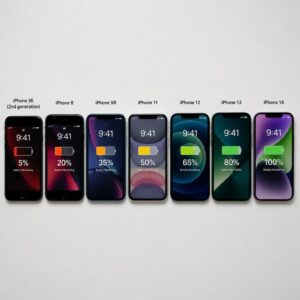
See the pattern? The battery is most comfortable — least stressed — between about 20% and 80%. At those levels, the cell voltage stays in a moderate range where degradation is minimized.
Push it to 100%, and you’re forcing the voltage to its peak. Hold it there for hours (like when you charge overnight), and you’re accelerating wear dramatically.
The Temperature Factor That Makes It Worse
High voltage + high temperature = battery destruction.
When your phone charges, it generates heat. Fast charging generates even more heat. If your phone is in a thick case, sitting on a soft surface like a pillow or mattress, or charging in direct sunlight, the temperature inside the battery can climb well above its comfort zone.
Lithium-ion batteries perform best between 20°C and 25°C (68°F–77°F). Above 35°C (95°F), degradation rates increase significantly. Above 45°C (113°F), you’re causing real damage with every charge.
A battery sitting at 100% charge in a hot environment degrades roughly twice as fast as one kept at 80% in a cool environment, according to data from Battery University.
What the Research Says — Hard Numbers on Battery Degradation
This isn’t guesswork. Decades of laboratory testing have quantified exactly how charging behavior affects battery lifespan.
Battery University’s Eye-Opening Data
Battery University, one of the most cited resources in the battery science community, has published extensive data on lithium-ion degradation. Here are some key findings:
- A lithium-ion cell charged to 4.2V (100%) and stored retains about 65% capacity after one year.
- The same cell charged to 4.1V (~90%) retains about 75% capacity after one year.
- Charged to only 3.92V (~60%), it retains roughly 89% capacity after one year.
The difference is staggering. Simply by keeping your battery at 60% instead of 100%, you can retain almost 25% more capacity over the same period.
Another finding: batteries charged to 100% lasted approximately 300–500 full cycles before dropping to 80% capacity. Batteries charged only to 80% lasted 1,000–2,000 cycles — roughly two to four times longer.
Real-World Testing Results
In 2023, a widely cited test by Electrek tracked two identical phones over 12 months. One was charged to 100% every night. The other was kept between 20% and 80%.
After 12 months:
- Phone A (charged to 100% nightly): Battery health dropped to 89%
- Phone B (kept between 20%–80%): Battery health stayed at 96%
That 7% difference might not sound like much, but it translates to roughly 45 minutes to an hour of additional screen time per day on Phone B. Over another year, that gap widens significantly.
Apple, Samsung, and Google Already Know This
The biggest smartphone manufacturers in the world are well aware of the voltage stress problem. They’ve been quietly building battery protection features into their software for years. The catch? Most of these features aren’t enabled by default, and most users have no idea they exist.
Apple’s Optimized Battery Charging
Apple introduced Optimized Battery Charging in iOS 13 (2019). When enabled, your iPhone learns your daily charging routine and pauses charging at 80% until shortly before you typically unplug.
Starting with iOS 17, Apple went even further by adding a dedicated 80% charge limit option. You can find it under Settings > Battery > Battery Health & Charging > Charging Optimization, where you can select from:
- Optimized Battery Charging (pauses at 80%, finishes before your alarm)
- 80% Limit (never charges above 80%)
- None (charges to 100% every time)
The iPhone 15 series and later also feature improved thermal management during charging, automatically throttling charge speed when the battery gets too warm.
➡️ Recommendation: If you have an iPhone running iOS 17 or later, go to Settings right now and set the charge limit to 80%. Your battery will thank you.
Samsung’s Battery Protection Features
Samsung offers a “Protect Battery” toggle (on Galaxy S21 and later) that caps charging at 85%. You’ll find it under Settings > Battery and Device Care > Battery > More Battery Settings > Protect Battery.
On newer Galaxy S24 models, Samsung expanded this with three options:
- Basic: Charges to 100% (no protection)
- Adaptive: Learns your habits, similar to Apple’s approach
- Maximum: Caps at 80%
Samsung’s own documentation states that using the Maximum protection setting can extend battery lifespan by “up to 2x” compared to charging to 100% daily.
➡️ Samsung Battery Protection Official Guide
Google’s Adaptive Charging on Pixel Phones
Google’s Adaptive Charging feature, available on Pixel 4 and later, works by slowing down the charge rate overnight to reach 100% right when your alarm goes off. While it doesn’t cap the charge at 80%, it reduces the time the battery spends at full voltage.
On Pixel 8 and later, Google added a manual charge limit option at 80%, accessible under Settings > Battery > Battery Health > Charge Optimization.
The fact that all three major manufacturers have independently built these features tells you everything you need to know. Charging to 100% is a recognized problem, and the companies building the phones want you to stop doing it.
The Ideal Charging Range — The 20-80 Rule Explained
If you’ve spent any time researching battery health, you’ve probably encountered the 20-80 rule. It’s simple: keep your battery between 20% and 80% as much as possible.
Why 20% to 80% Is the Sweet Spot
This range keeps the cell voltage in the moderate zone (roughly 3.6V to 4.0V), minimizing voltage stress and mechanical strain on the electrodes.
Here’s how different charging ranges affect battery longevity:
| Charging Range | Estimated Cycle Life | Relative Lifespan |
|---|---|---|
| 0%–100% | ~300–500 cycles | 1x (baseline) |
| 10%–90% | ~600–1,000 cycles | 2x |
| 20%–80% | ~1,000–2,000 cycles | 3–4x |
| 25%–75% | ~2,000–4,000 cycles | 5–6x |
The 20-80 range offers the best balance between usable battery capacity per charge and long-term battery health. Going narrower (like 25-75%) extends lifespan even more but gives you only 50% of your battery’s capacity per charge, which isn’t practical for most people.
Is It Okay to Occasionally Charge to 100%?
Yes. Relax.
Charging to 100% once in a while — before a long flight, during a road trip, or when you know you’ll need every last drop of juice — won’t destroy your battery. The damage comes from habitually charging to 100% and keeping it there for extended periods.
Think of it like diet. Having a slice of cake on your birthday isn’t going to ruin your health. Eating cake every single day for a year will.
The goal is to make the 20-80 range your default habit, not an ironclad rule you stress about. Stress about your battery charge level would kind of defeat the purpose, right?
7 Smart Charging Habits That Extend Battery Life by Years
Now let’s get practical. Here are seven specific, actionable habits you can start today.
1. Set a Charge Limit (If Your Phone Supports It)
This is the single most impactful thing you can do.
- iPhone (iOS 17+): Settings > Battery > Battery Health & Charging > 80% Limit
- Samsung (S21+): Settings > Battery > More Battery Settings > Protect Battery (85%)
- Google Pixel 8+: Settings > Battery > Charge Optimization > 80% Limit
- OnePlus: Settings > Battery > Battery Health > Charging Limit
If your phone doesn’t have a built-in charge limit, use apps like AccuBattery (Android) to set a charge alarm that alerts you when the battery reaches 80%.
➡️ Download AccuBattery on Google Play
2. Stop Charging Overnight — Or Use Smart Features
The average person sleeps for 7-8 hours. Your phone reaches 100% in about 1-2 hours. That means your battery sits at maximum voltage for 5-6 hours every single night.
Over a year, that’s roughly 2,000 hours of unnecessary voltage stress.
Better alternatives:
- Enable Optimized Charging or Adaptive Charging so your phone manages this automatically
- Charge your phone in the evening before bed, unplug at 80%, and start the morning with plenty of battery
- Use a smart plug with a timer to cut power to your charger after a set duration
➡️ Check out smart plug options on Amazon
3. Avoid Fast Charging When You Don’t Need Speed
Fast charging is a marvel of engineering. Getting 50% battery in 15 minutes is genuinely useful when you’re rushing out the door.
But fast charging generates significantly more heat than standard charging, and heat is the battery’s second-worst enemy (after voltage stress).
When to use fast charging:
- You’re in a hurry and need a quick top-up
- Your phone has good thermal management (most 2024-2025 flagships do)
When to skip fast charging:
- You’re charging overnight (no rush)
- Your phone is already warm
- You’re in a hot environment
Many phones let you disable fast charging in settings. On Samsung devices, go to Settings > Battery > More Battery Settings and toggle off Fast Charging.
Some chargers also let you choose wattage. A standard 5W charger generates far less heat than a 65W fast charger. For overnight charging, slow and steady wins the race.
➡️ Recommended: Anker 20W USB-C Charger on Amazon
4. Keep Your Phone Cool While Charging
Heat accelerates every degradation mechanism inside a lithium-ion battery. Here’s how to keep temperatures down while charging:
- Remove your phone case while charging (cases trap heat)
- Don’t charge on soft surfaces like beds, pillows, or couches (they insulate heat)
- Place your phone on a hard, cool surface like a desk or nightstand
- Avoid using your phone while it charges (especially gaming or video streaming, which generate additional heat)
- Never charge in direct sunlight or inside a hot car
A phone that stays below 30°C (86°F) while charging will retain significantly more battery capacity over time than one that regularly hits 40°C+ (104°F+).
5. Use the Right Charger
Not all chargers are created equal. Using a low-quality, uncertified charger can deliver inconsistent voltage and current, causing unnecessary stress and potential safety hazards.
Best practices for chargers:
- Use the charger that came with your phone, or a certified replacement
- Look for USB-IF certified or MFi certified (for Apple) chargers and cables
- Avoid gas station bargain bin chargers (seriously)
- Wireless charging generates more heat than wired charging — use it sparingly if battery longevity is your priority
Trusted charger brands include Anker, Belkin, Aukey, and Ugreen. All of these undergo rigorous safety testing and deliver consistent power output.
➡️ Belkin Wireless Charging Pads on Amazon
6. Don’t Let Your Battery Hit 0%
We’ve spent most of this article talking about the dangers of 100%, but 0% is bad too.
Deep discharge forces the cell voltage below 3.0V, which can cause:
- Copper dissolution from the anode current collector, potentially creating internal short circuits
- Irreversible capacity loss from collapsed electrode structures
- Increased SEI layer reformation on the next charge cycle
Modern phones have protection circuits that shut down the phone before the battery reaches truly dangerous voltage levels. But the software “0%” on your screen still represents a very low state of charge that stresses the battery.
Rule of thumb: Start charging when you hit 20%. If you can’t get to a charger, at least avoid using your phone below 10%.
7. Calibrate Your Battery Periodically
Over time, your phone’s battery percentage indicator can drift from the battery’s actual state of charge. Calibration helps resync the software estimation with reality.
How to calibrate (do this once every 2-3 months):
- Use your phone normally until it shuts off from low battery
- Leave it off for at least an hour
- Plug it in and charge to 100% without interruption
- Leave it plugged in at 100% for an additional 30 minutes
- Unplug and restart your phone
This is one of the few times charging to 100% is beneficial — you’re giving the battery management system a full reference point to recalibrate its readings.
The Overnight Charging Myth — What’s Really Happening at 3 AM
“I’ve charged my phone overnight for years and it’s fine.”
You’ve probably heard this argument. Maybe you’ve said it yourself. And to be fair, your phone probably hasn’t caught fire or stopped working. But “hasn’t exploded” is a low bar for battery health.
Trickle Charging and Micro-Cycles
Modern smartphones don’t keep pumping power into the battery after it hits 100%. Instead, they stop charging, let the battery dip to about 99% or 98%, then start charging again. This creates a cycle of micro-charges at the very top of the voltage range.
Each micro-charge is a small cycle at maximum voltage — exactly the kind of stress that degrades batteries fastest.
Your phone might go through 20-40 of these micro-cycles in a single overnight charging session. Over a year, that’s thousands of additional high-voltage micro-cycles on top of your regular daily usage.
How Overnight Charging Accelerates Wear
Here’s a comparison of two charging scenarios:
| Factor | Evening Charge (Unplug at 80%) | Overnight Charge (to 100%) |
|---|---|---|
| Time at high voltage | ~0 minutes | ~5-6 hours |
| Micro-cycles per night | 0 | 20-40 |
| Average battery temperature | Lower | Higher (sustained) |
| Annual capacity loss | ~2-4% | ~8-12% |
| Battery health after 2 years | ~92-96% | ~76-84% |
The numbers speak for themselves. Overnight charging isn’t catastrophic on any single night, but the cumulative effect over months and years is substantial.
Fast Charging vs. Slow Charging — Which Is Better for Battery Health?
Fast charging has become a major selling point. Companies like OnePlus, Xiaomi, and Oppo have pushed charging speeds to 100W, 150W, even 240W — promising a full charge in under 20 minutes.
But is faster better?
The Heat Problem with Fast Charging
Fast charging works by pushing more current through the battery in less time. More current means more heat. More heat means faster degradation.
At 100W charging, battery temperatures can easily reach 38-42°C (100-108°F). That’s within the safe operating range, but well above the optimal temperature for long-term battery health.
Multiple studies have found that batteries subjected to regular fast charging lose capacity 20-30% faster than those charged at standard rates over the same number of cycles.
That said, modern fast charging implementations are getting smarter. Most phones use a multi-stage charging approach:
- Stage 1 (0%–70%): Full speed, because the battery can absorb high current at lower states of charge without excessive heat
- Stage 2 (70%–90%): Reduced speed to lower heat and voltage stress
- Stage 3 (90%–100%): Slow trickle to minimize peak voltage stress
This design means the first 70% is charged quickly without much penalty. The real stress comes in that last 10-15%.
When Fast Charging Makes Sense
Fast charging isn’t the enemy. Like most tools, it’s about using it appropriately:
✅ Use fast charging when:
- You need a quick top-up before leaving the house
- You’re charging from 10% to 60% (the safest fast-charging range)
- Your phone has advanced thermal management
❌ Avoid fast charging when:
- You’re charging overnight (you have 8 hours — no need for speed)
- Your phone is already warm from heavy use
- You’re in a hot environment (car dashboard, direct sunlight)
How to Check Your Battery Health Right Now
Wondering how much damage has already been done? Here’s how to check your current battery health.
Checking Battery Health on iPhone
- Open Settings
- Tap Battery
- Tap Battery Health & Charging
- Look at Maximum Capacity
This percentage tells you how much capacity your battery retains compared to when it was new. A phone with Maximum Capacity of 87% has lost 13% of its original capacity.
Apple considers a battery “consumed” when it drops below 80% maximum capacity, at which point it’s eligible for replacement under AppleCare+.
Checking Battery Health on Android
Android doesn’t have a universal battery health indicator in the settings (it varies by manufacturer), but here are your options:
Samsung:
- Settings > Battery and Device Care > Battery > Look for “Battery health” or use Samsung Members app for a diagnostic test
Google Pixel:
- Settings > Battery > Battery Health
Other Android phones:
- Dial
*#*#4636#*#*in your phone app to access a hidden diagnostics menu (not available on all phones) - Use a third-party app like AccuBattery
Third-Party Apps Worth Using
AccuBattery (Android) — Tracks your battery’s health over time, measures charge and discharge rates, estimates remaining capacity, and sends alerts at your chosen charge limit. Free with a Pro version.
coconutBattery (Mac + iPhone) — A desktop app that gives you detailed battery health information for your iPhone when connected to a Mac. Displays cycle count, design capacity vs. current capacity, and manufacturing date.
Battery Guru (Android) — Another solid option for tracking battery health, temperature monitoring, and setting charge alarms.
When Should You Replace Your Battery?
Batteries don’t last forever, even with perfect charging habits. At some point, replacement becomes the smart move.
Signs Your Battery Needs Replacement
Watch for these warning signs:
- Battery health below 80% (check using the methods above)
- Phone dies unexpectedly at 15-20% charge
- Rapid drain — losing 20%+ per hour during light use
- Phone gets abnormally hot during normal tasks
- Battery is physically swollen (the screen or back panel is bulging) — replace immediately; this is a safety hazard
- Phone restarts randomly under moderate load
- Charging takes significantly longer than it used to
Battery Replacement Costs in 2025
Here’s a rough guide to replacement costs:
| Device | Official Replacement Cost | Third-Party Cost |
|---|---|---|
| iPhone 15/16 series | $89–$119 (Apple) | $40–$70 |
| iPhone 15 Pro/16 Pro | $99–$129 (Apple) | $50–$80 |
| Samsung Galaxy S24 | $99 (Samsung) | $40–$65 |
| Google Pixel 8 | $99 (Google/uBreakiFix) | $40–$60 |
➡️ Apple Battery Replacement Service
➡️ iFixit DIY Battery Replacement Kits
If you’re comfortable with DIY repairs, iFixit sells complete battery replacement kits with step-by-step guides for most major phone models. Prices range from $20 to $50, and most replacements take 30-60 minutes.
Important note: Replacing a battery yourself may void your warranty and water resistance. If your phone is still under warranty, use the manufacturer’s official service.
The Future of Battery Technology — Are We Close to a Fix?
The limitations of lithium-ion batteries have driven massive investment in next-generation battery technologies. Here’s what’s on the horizon.
Solid-State Batteries
Solid-state batteries replace the liquid electrolyte with a solid material, offering several advantages:
- Higher energy density (50-100% more capacity in the same size)
- Faster charging without the same heat penalty
- Longer lifespan (potentially 5,000+ cycles)
- Improved safety (no flammable liquid electrolyte)
Toyota, Samsung SDI, and QuantumScape are leading the charge (pun intended) in solid-state battery development. Toyota has announced plans to begin mass production of solid-state batteries for electric vehicles by 2027-2028, with smartphone-sized versions expected to follow within a few years.
Silicon Anode Technology
Current lithium-ion batteries use graphite anodes. Silicon can theoretically store 10 times more lithium than graphite, which would dramatically increase battery capacity.
The challenge? Silicon expands by up to 300% when it absorbs lithium ions, causing it to crack and crumble. Companies like Sila Nanotechnologies, Amprius, and Enovix have developed nano-engineered silicon structures that can handle this expansion.
The Whoop 4.0 fitness tracker was one of the first consumer devices to use a silicon anode battery, and Samsung has hinted at incorporating silicon anode technology in future Galaxy phones.
AI-Powered Battery Management
This is happening right now, not in the future.
Modern smartphones use machine learning algorithms to optimize charging patterns based on your usage habits. Apple’s Optimized Battery Charging, Samsung’s Adaptive Charging, and Google’s Adaptive Charging all use AI to predict when you’ll unplug your phone and adjust the charging schedule accordingly.
Future AI battery management systems will likely:
- Monitor individual cell health in real-time
- Adjust voltage limits dynamically based on battery age and temperature
- Predict battery failure before it happens
- Optimize power consumption at the app level to reduce charge cycles
Qualcomm’s Snapdragon processors already include AI-powered battery management features that learn your usage patterns and proactively manage power distribution. Expect this to become standard across all price ranges within the next 2-3 years.
Quick Reference: Charging Do’s and Don’ts
Here’s everything from this article distilled into one easy-reference table:
| ✅ DO | ❌ DON’T |
|---|---|
| Keep charge between 20-80% | Charge to 100% habitually |
| Enable built-in charge limits | Leave phone plugged in overnight without smart charging |
| Use certified chargers and cables | Use cheap, uncertified chargers |
| Remove your case while charging | Charge on soft surfaces (beds, pillows) |
| Charge in a cool, ventilated area | Charge in direct sunlight or hot cars |
| Use slow charging when time permits | Use fast charging unnecessarily |
| Monitor battery health regularly | Ignore signs of battery degradation |
| Start charging at 20% | Let battery drain to 0% regularly |
| Calibrate battery every 2-3 months | Assume battery percentage is always accurate |
| Replace battery when health drops below 80% | Keep using a dangerously swollen battery |
Print this out. Tape it near your charging station. Make it a habit.
FAQs — Your Battery Charging Questions Answered
1. Is charging my phone to 100% really that bad?
A single charge to 100% won’t damage your battery noticeably. The problem is repetition. Charging to 100% every day — especially overnight — exposes the battery to sustained high voltage stress, which accelerates chemical degradation over time. Studies show batteries kept between 20-80% can last 3-4 times longer than those regularly charged to 100%. For occasional full charges before travel or long days, don’t worry about it. Just don’t make it your daily default.
2. What is the best percentage to charge my phone to?
The optimal upper limit is 80%. This keeps the cell voltage below the high-stress zone while still giving you plenty of usable battery life. The ideal operating range is 20% to 80%, often called the 20-80 rule. Most modern phones from Apple, Samsung, and Google now include settings that let you cap charging at 80% or 85% automatically.
3. Does wireless charging damage my battery?
Wireless charging itself isn’t inherently more damaging than wired charging, but it does generate more heat due to energy losses in the electromagnetic field between the charging pad and your phone. This additional heat can accelerate battery degradation over time. If you use wireless charging regularly, remove your phone case, use a quality charging pad from a reputable brand (like Belkin or Anker), and avoid high-wattage wireless chargers for overnight use.
4. Should I turn off fast charging?
If battery longevity is your priority, yes — at least for situations where you don’t need the speed. Fast charging generates more heat than standard charging, which accelerates battery wear. Most phones let you disable fast charging in settings. A good compromise: use fast charging when you need a quick top-up during the day, and switch to slow charging (or use a lower-wattage charger) overnight.
5. How long should a phone battery last before needing replacement?
With good charging habits (20-80% range, minimal overnight charging, avoiding extreme temperatures), a modern smartphone battery should retain 80%+ capacity for 3-4 years. With poor habits (daily 100% charges, overnight charging, frequent fast charging in hot conditions), you might hit the 80% threshold in just 18-24 months. Most manufacturers offer battery replacement services when capacity drops below 80%.
6. Is it bad to use my phone while it’s charging?
Using your phone while charging isn’t dangerous, but it does generate additional heat from the processor and screen on top of the heat from charging. This elevated temperature can accelerate battery degradation. Light tasks like reading or messaging are fine. Avoid heavy tasks like gaming, video editing, or GPS navigation while charging.
7. Does battery calibration really work?
Battery calibration doesn’t fix a degraded battery — nothing short of a chemical overhaul can do that. What it does is recalibrate the software estimation of your battery’s capacity, so the percentage displayed on screen more accurately reflects the actual charge level. If your phone dies at 15% or shows erratic battery readings, calibration can help. Do it once every 2-3 months by letting the phone die, waiting an hour, then charging to 100% uninterrupted.
8. Are third-party chargers safe to use?
Certified third-party chargers from reputable brands (Anker, Belkin, Aukey, Ugreen) are perfectly safe and often just as good as the original manufacturer’s charger. The key is to look for certifications: USB-IF certified for USB-C, MFi certified for Apple devices, and relevant safety certifications like UL, FCC, or CE. Avoid ultra-cheap, uncertified chargers from unknown brands — these can deliver inconsistent power and in rare cases pose fire hazards.
9. Does cold weather affect battery health?
Yes. Extreme cold reduces the chemical reactivity inside the battery, which temporarily lowers its capacity and voltage output. That’s why your phone might die faster on a cold winter day. Charging a lithium-ion battery below 0°C (32°F) is particularly risky because it can cause lithium plating on the anode, which permanently reduces capacity and can create safety hazards. If your phone is very cold, warm it to room temperature before charging.
10. Will future batteries solve the 100% charging problem?
Likely, yes. Solid-state batteries, expected to enter consumer electronics within the next 5-7 years, are far more resilient to voltage stress and can handle full charges with significantly less degradation. Silicon anode technology and AI-powered battery management systems are also reducing the impact of full charges. Until these technologies become mainstream, the 20-80 rule remains the best strategy for extending battery life.
Final Thoughts — Small Habits, Big Battery Gains
Your phone battery is one of the most expensive and least replaceable components in your device. A new battery costs $50-$130. A new phone costs $800-$1,200+. And every battery that gets tossed into a landfill represents a small environmental cost that adds up across billions of devices.
The 20-80 rule isn’t complicated. It doesn’t require any special equipment. It just requires a small shift in habits:
- Today: Go into your phone’s settings and enable the 80% charge limit or optimized charging feature. This takes 30 seconds and is the single highest-impact action.
- This week: Start unplugging your phone when it hits 80%. If you charge overnight, make sure a smart charging feature is active.
- This month: Remove your case while charging, avoid fast charging when you don’t need it, and start monitoring your battery health.
These small changes, applied consistently, can extend your battery’s useful life by 2-3 years — saving you money, reducing e-waste, and keeping your phone running strong long after the warranty expires.
Your phone does a lot for you. This is one of the easiest ways to return the favor.
Have questions about battery health, charging accessories, or phone maintenance? Drop a comment below or check out our related guides on CyberTechNerd.com. And while you’re optimizing your phone’s battery, don’t forget to protect the data on it — check out our top VPN picks for 2025 to keep your digital life secure.